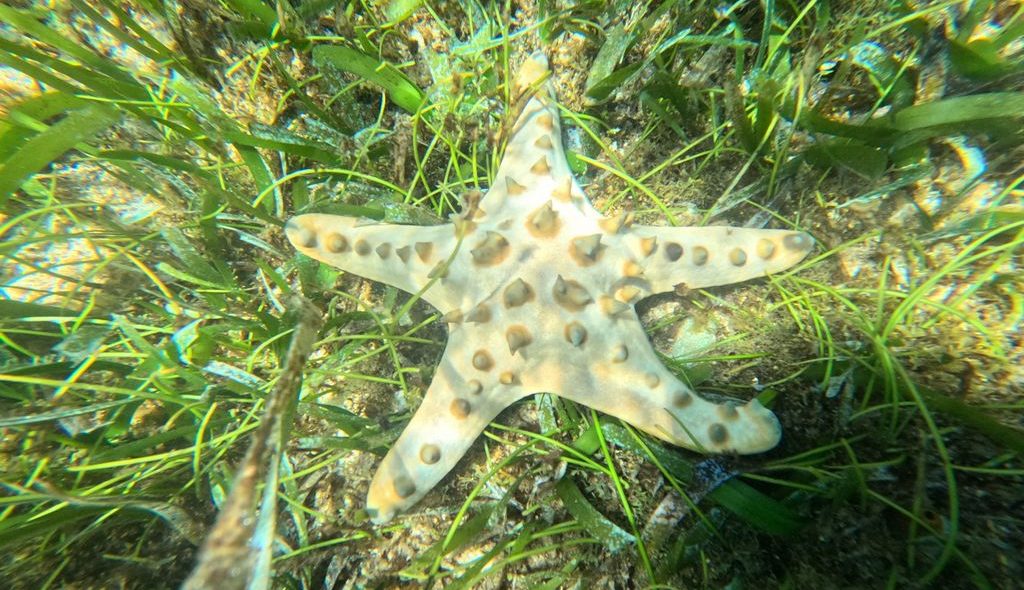
Seagrass meadows are vital ecosystems for humans, biodiversity, and the climate, as they can capture and store up to 83,000 tonnes of carbon per square kilometer (equivalent to 8.3 tonnes per hectare annually) in their biomass and sediments, making them one of the most efficient natural carbon sinks per unit area (Fourqurean et al., Nature Geoscience, 2012), while globally seagrasses hold about 10–18% of the ocean’s total carbon stock despite covering less than 0.2% of the seafloor (Duarte et al., Biogeosciences, 2010); in addition, seagrass beds stabilize sediments, improve water clarity, protect coastlines from erosion, and provide critical nursery habitats for fish, sea turtles, and endangered species such as dugongs, with more than 20% of the world’s largest fisheries species spending part of their life cycle in seagrass ecosystems (Unsworth et al., Fish and Fisheries, 2019); therefore, the protection and restoration of seagrass meadows are indispensable not only for mitigating climate change and enhancing ocean health but also for sustaining marine biodiversity, fisheries productivity, and the livelihoods of coastal communities.
Seagrass conservation with Seasoldier starts with site assessment to determine location feasibility, suitable planting methods, and selected seedlings, followed by restoration activities. It also includes education about seagrass, transplantation using proven methods suitable for the site, and continuous monitoring and maintenance for at least one year to ensure the seagrass can grow and thrive naturally in the restoration area. We also involve local communities to ensure that seagrass conservation not only benefits the marine environment but also supports the well-being of the surrounding community. The entire process, from initial assessment to monitoring and maintenance, is carried out by the Seasoldier Conservation team.