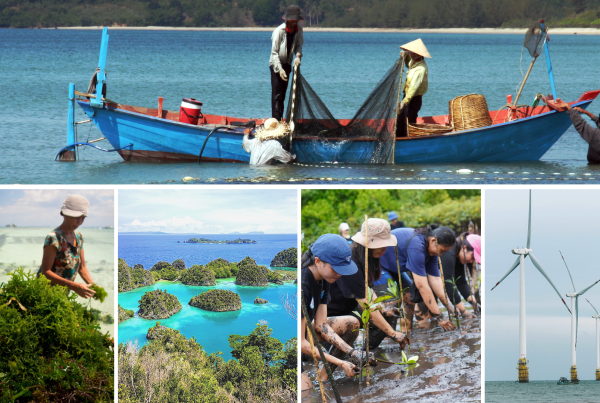
Seagrass is a flowering plant that grows in salty and brackish waters. In contrast to the seaweeds, Seagrass belongs to the group of monocotyledons with roots, stems, and leaves, producing flowers and seeds. These plants form huge underwater pastures that play an important role in maintaining the balance of coastal ecosystems. Seagrass, often referred to as part of the ‘blue forest‘, covers only about 0.1% of the seabed. However, it can store up to 18% of the ocean’s carbon, making it one of the most efficient natural carbon sinks in the marine environment.
Beyond storing carbon, each square meter of seagrass beds produces oxygen essential for marine life. Its leaves absorb nutrients, slow the flow of water, and capture particles such as sand, beds, and silt. Meanwhile, roots and rhizomes stabilize sediments, improve water clarity and quality, reduce erosion, and protect the coastline from storm floods and large waves.
Seagrass also helps maintain healthy water conditions by absorbing excess nutrients from land drainage. In nutrient-poor areas, seagrass appears to be a natural pump, absorbing nutrients from sediments and returning them to the water through the leaves. This process supports a balanced nutritional cycle and increases productivity in the surrounding ocean ecosystem.
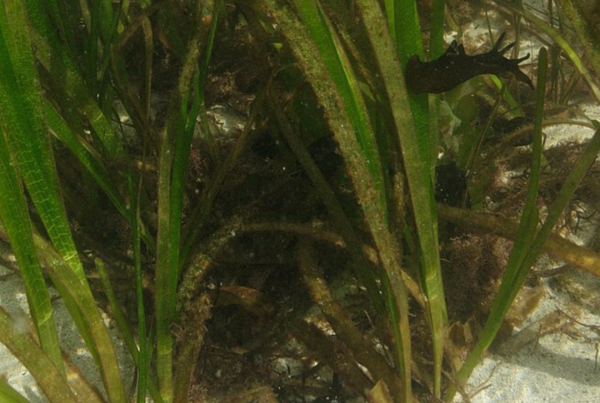
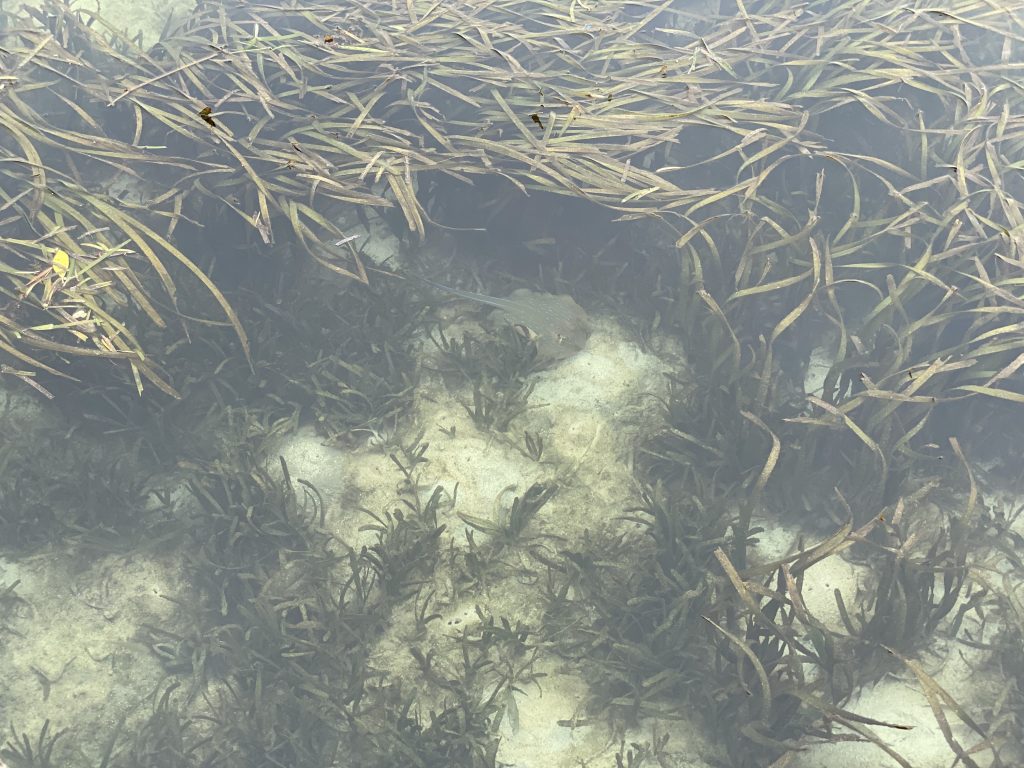
These underwater beds are often called “natural nurseries” because the canopy formed by leaves provides countless types of ocean protection and breeding sites. Small invertebrates such as shrimp, crabs, and adolescents rely on seaweed beds as important habitats.

Leafs contain algae, microalgae, bacteria, and other small organisms, while marine life such as sponges, clams, polychaete worms, and sea anemones live between the leaves or within the sediment. This rich living space attracts larger species, including fish, sharks, sea turtles, dugongs, inkfish, and sea urchins. Some remain permanent, others temporarily visit to feed and shelter.
Global initiatives: Japan’s initiative to combat climate change
Globally, awareness of the importance of seagrass is growing. Many countries are beginning to include seagrass conservation and restoration in their national climate action strategies.
One notable example comes from Japan, which recognizes seagrass and seaweed as nature-based solutions to capture carbon dioxide emissions. A milestone moment occurred when Japan, in an unprecedented move, included carbon sequestration from seagrass and seaweed in its annual greenhouse gas report submitted to the UNFCCC. This move aligns with Japan’s goal of achieving carbon neutrality by 2050.
Scientific support for this initiative grew stronger after a global study published by Conservation International in May 2025 revealed that well-managed seagrass ecosystems could prevent the release of over 1.2 billion tons of carbon into the atmosphere—equivalent to the annual emissions of 100 million U.S. households. This finding highlights that seagrass is far more than just a marine plant; it is a frontline defense in climate change mitigation that has long been overlooked.
Serious Threats to Seagrass beds
Despite their importance, seagrass beds are disappearing at an alarming rate. According to the United Nations Environment Programme (UNEP), the world loses a seagrass meadow every 30 minutes, with an estimated 7% annual reduction. The main drivers of this loss include coastal development, ocean acidification, and rising sea temperatures caused by climate change.
Nearly 30% of the world’s total seagrass area has already been lost due to human activities. Out of the 72 known seagrass species, at least 22 are in decline. Major threats include urban and industrial waste, dredging, uncontrolled fishing and boating activities, and the impacts of climate change.
Recent data also show that seagrass beds are among the least protected coastal habitats. Currently, only 26% of recorded seagrass beds are located within Marine Protected Areas (MPAs), compared to 40% for coral reefs and 43% for mangroves. This lack of protection accelerates their destruction, worsening the health of coastal ecosystems worldwide, including in Indonesia.
Seagrass Restoration Efforts in Indonesia
Indonesia, home to about 11.5% of the world’s seagrass beds, has started taking action to protect and restore these critical ecosystems.
On October 9, 2023, the Ministry of Marine Affairs and Fisheries (KKP) launched the Blue Carbon Seagrass Mitigation Action Profile during the AIS Forum in Bali. This national roadmap highlights the role of seagrass as a natural carbon sink and outlines key strategies such as ecosystem restoration, habitat protection, sustainable marine spatial planning, and community participation in monitoring and management.
These efforts are aligned with Indonesia’s commitment to reducing greenhouse gas emissions under its Nationally Determined Contribution (NDC), strengthening the country’s role in global climate change mitigation while safeguarding coastal livelihoods and biodiversity.
Protecting Seagrass, Securing Our Future
Seagrass may not be as well-known as coral reefs or mangroves, but its role is irreplaceable. It is a hidden carbon hero, tirelessly working to absorb carbon, protect coastlines, improve water quality, and sustain marine life.
Protecting seagrass is more than just a conservation effort—it is an investment in our shared future. With greater awareness, the right technology, and strong policies, there is still time to ensure that the “blue heart” of our planet keeps beating.
If ignored, the loss of seagrass beds will worsen the climate crisis, threaten food security, and harm future generations. By acting now, we can safeguard one of nature’s most powerful allies in the fight against climate change.
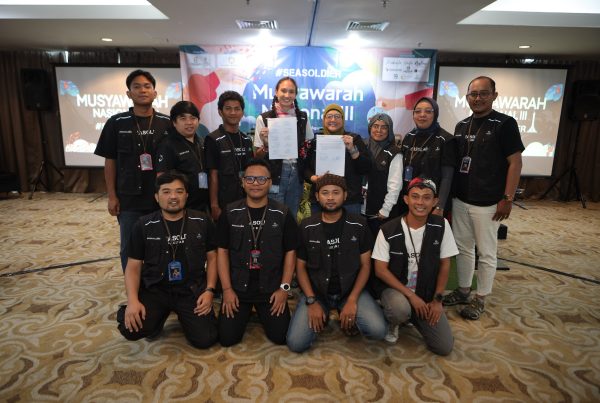
 Recognizing this urgency, organizations like Seasoldier has been actively engaged in seagrass conservation through a comprehensive approach that combines education, community participation, and a minimum of one year of monitoring and maintenance to ensure the long-term protection and restoration of seagrass beds. This commitment is reflected in a series of hands-on initiatives, ranging from ecological restoration projects to youth-centered awareness campaigns designed to foster environmental stewardship from an early age. Beyond its independent efforts, Seasoldier works closely with local communities, government stakeholders, and conservation partners to emphasize the ecological, social, and climate significance of seagrass ecosystems, while inspiring coastal populations to act as their guardians.
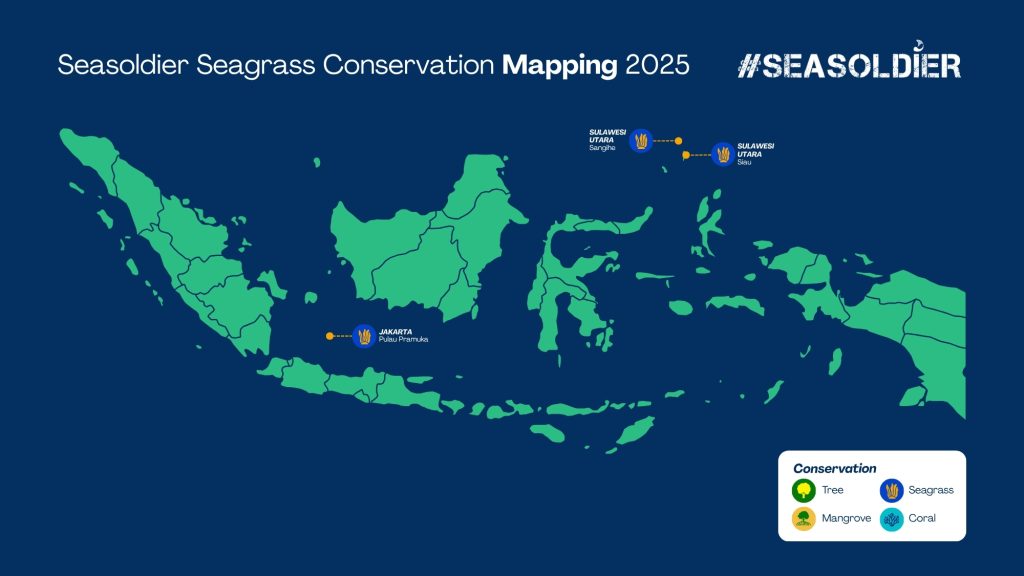
This grassroots and collaborative strategy not only strengthens the rehabilitation of degraded marine ecosystems but also positions seagrass conservation as a shared duty and a tangible contribution to climate resilience and food security. By empowering people to see themselves as protectors of the ocean, the program transforms conservation into a collective journey rather than an isolated effort. At present, Seasoldier’s seagrass conservation initiatives are being implemented in several key locations: Pramuka Island in the Kepulauan Seribu, as well as Sangihe Island and Siau Island in North Sulawesi—areas where marine biodiversity is rich but also vulnerable to the pressures of climate change and human activity.
Writer: Novi Wiji Lestari
Editor: Diyah Deviyanti
References:
- Smithsonian Ocean. (2013). Seagrass and Seagrass Beds. Smithsonian Institution. Retrieved September 15, 2025, from https://ocean.si.edu/ocean-life/plants-algae/seagrass-and-seagrass-beds
- Mongabay. (2023). Five ways often-unheralded seagrasses boost biodiversity. Mongabay News. Retrieved September 15, 2025, from https://news.mongabay.com/2023/05/five-ways-often-unheralded-seagrasses-boost-biodiversity
- Japan Times. (2024). Battling climate change, Japan looks to seagrass for carbon capture. The Japan Times. Retrieved September 15, 2025, from https://www.japantimes.co.jp/news/2024/02/14/environment/japan-seagrass-carbon-capture
- Ocean Conservancy. (2025). New Research: Protecting Seagrass Ecosystems is Essential to Preventing Climate Damages. Ocean Conservancy. Retrieved September 15, 2025, from https://oceanconservancy.org/blog/2025/01/30/new-research-protecting-seagrass-ecosystems
- UNEP-WCMC. (2020). Seagrass protection is key to tackling climate change – UNEP-WCMC. United Nations Environment Programme-World Conservation Monitoring Centre. Retrieved September 15, 2025, from https://oceanconservancy.org/blog/2025/01/30/new-research-protecting-seagrass-ecosystems
- Ministry of Environment and Forestry of Indonesia. (2023). Profil Aksi Mitigasi Karbon Biru Lamun Solusi Atasi Perubahan Iklim. KLHK Indonesia. Retrieved September 15, 2025, from https://ditjenppi.menlhk.go.id/profil-karbon-biru-lamun