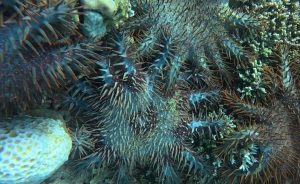
The ocean is home to countless unique species that play an important role in maintaining the balance of marine ecosystems. Among the vibrant beauty of coral reefs lives one species that has drawn increasing attention from researchers and conservation groups worldwide: the Crown-of-Thorns starfish, commonly known as COTS. Scientifically referred to as Acanthaster planci, this giant sea star naturally inhabits the Indo-Pacific region, including Indonesia, which lies within the Coral Triangle, one of the most biodiverse marine areas on Earth.
COTS Species Type
Recent genetic studies have shown that Crown-of-Thorns Starfish are not represented by a single species alone. Scientists have identified at least four species distributed across the Indo-Pacific region, including the Northern and Southern Indian Ocean species (Acanthaster planci and Acanthaster mauritiensis), an unnamed Red Sea species, and a Pacific species found in the Great Barrier Reef currently referred to as Acanthaster cf. solaris.
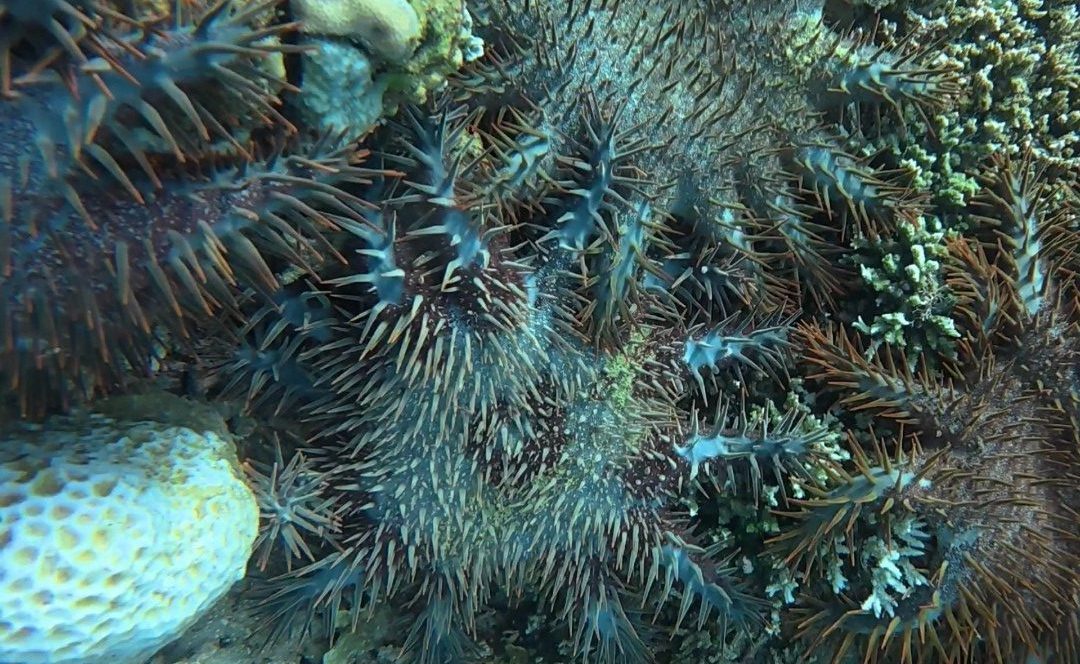
At first glance, COTS may appear fascinating due to their crown-like shape, multiple arms, and brightly colored bodies covered in sharp spines. These sea stars can grow up to 80 cm in diameter and, in some cases, nearly reach one meter in size. They may have up to 21 arms lined with venomous spines measuring around 4 cm long, which function as a natural defense mechanism against predators. The toxins coating these spines can cause severe pain and harmful reactions in animals or humans that come into contact with them.
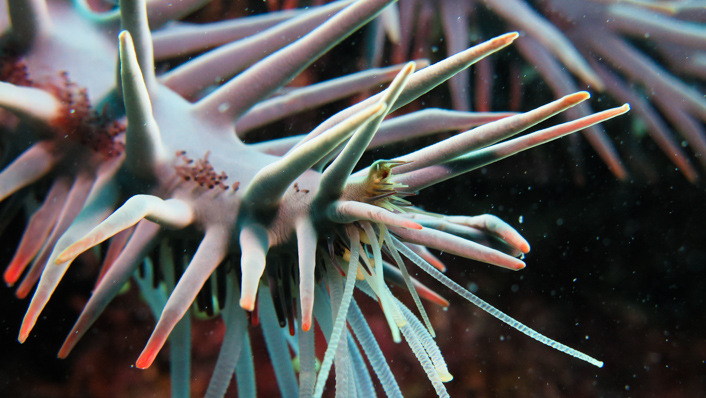 Photo source: Australian Institute of Marine Science (AIMS) — The spines of the Crown-of-Thorns Starfish are coated with venom, serving as a natural defense mechanism against predators
COTS as a Threat to Coral Reef Damage
Despite their striking appearance, Crown-of-Thorns Starfish are considered one of the greatest threats to coral reefs when their populations increase uncontrollably. Unlike most sea stars, which pose little danger to coral ecosystems, COTS feed on living coral tissue, including coral polyps, by extending their stomachs through their mouths onto the coral surface. Digestive enzymes are then released to break down the coral tissue externally, after which the stomach is pulled back into the body, leaving behind white coral skeletons, a visible sign that the coral has died. A single Crown-of-Thorns Starfish can consume approximately 10 square meters of coral each year, meaning large populations can cause severe damage to reef ecosystems in a relatively short period of time
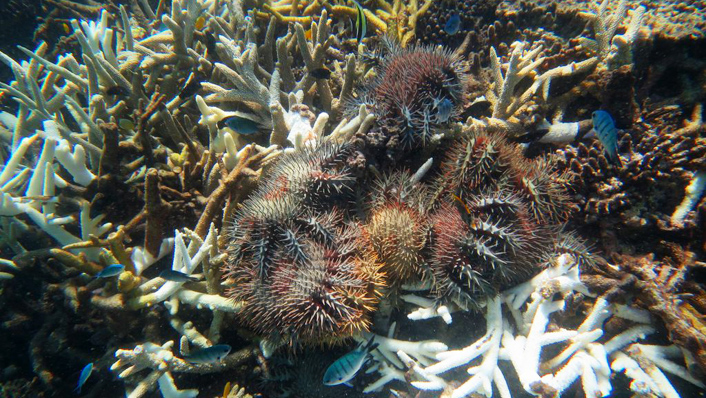 Photo source: Australian Institute of Marine Science (AIMS) — Several Crown-of-Thorns Starfish feeding together on coral as part of a larger aggregation on the Great Barrier Reef. Image: LTMP
Causes of the COTS Population Explosion Outbreak
Under natural conditions, COTS are still part of a balanced marine ecosystem. They help regulate the growth of fast-growing coral species, allowing space for other corals to develop. However, major problems arise when population explosions, commonly known as outbreaks, occur. During these outbreaks, the number of sea stars increases dramatically and can devastate extensive coral reef areas within a short timeframe.
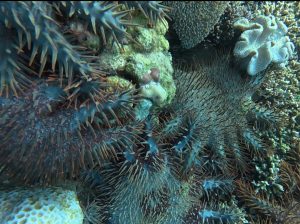
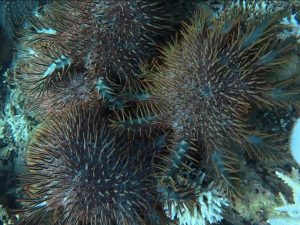
Photo source: Seasoldier Documentation
Damage caused by COTS is often marked by the appearance of white coral skeletons after the living coral tissue has been directly consumed by the starfish. At first glance, this condition may resemble coral bleaching, even though the two processes are fundamentally different. In the case of COTS predation, the white color appears because the coral tissue and polyps have been removed, leaving only the coral skeleton behind. In contrast, coral bleaching occurs when corals experience stress and expel the zooxanthellae algae living within their tissues, which provide both color and energy to the coral. As a result, the coral appears white even though the living tissue is still present. In some cases, bleached corals can recover if environmental conditions return to normal. Corals that have lost their living due to COTS predation, however, generally do not survive. Meanwhile, the term “damaged coral” refers to the physical destruction of coral reefs, including broken, crushed, sediment-covered, or disturbed reef structures caused by human activities or environmental factors.
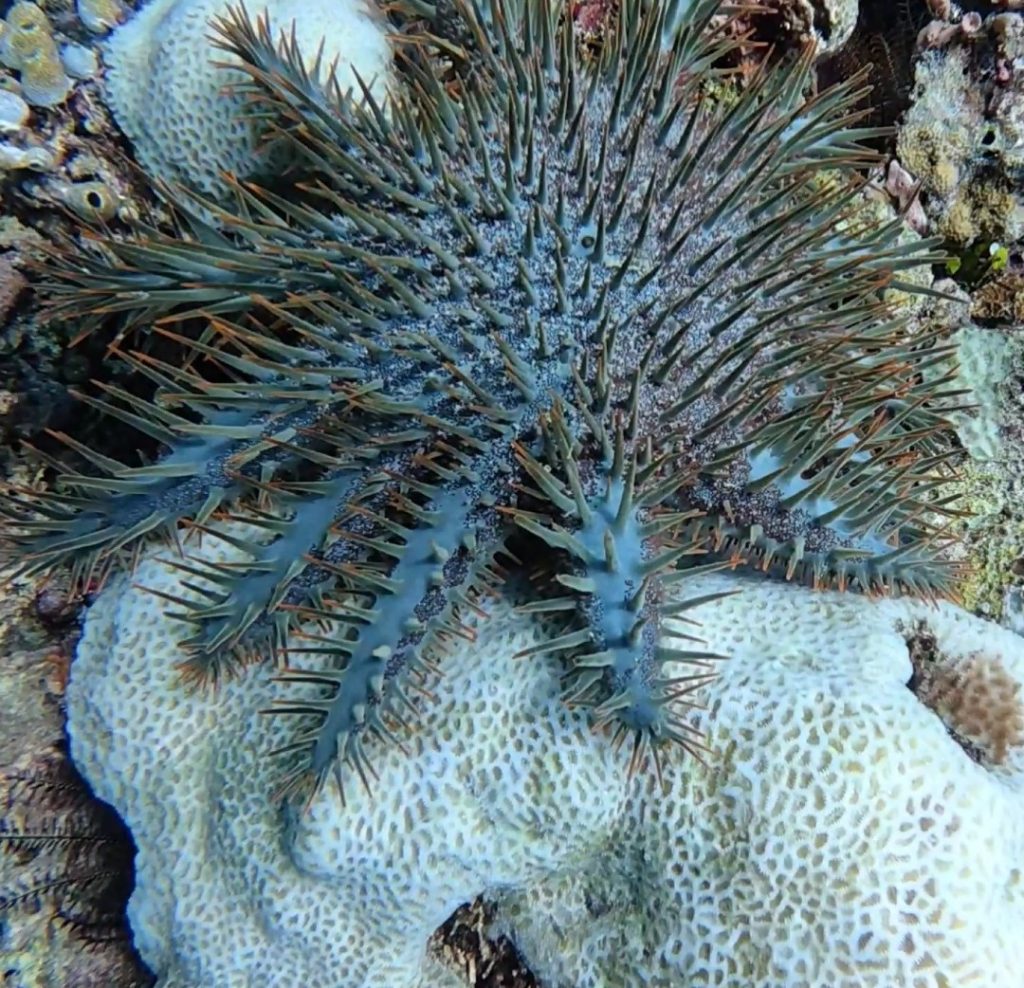 Photo source: Seasoldier Documentation
The exact causes behind Crown-of-Thorns Starfish outbreaks are still being studied. Scientists believe that outbreaks can occur naturally as part of the species’ population cycle. However, human activities are thought to intensify both the frequency and severity of these events. Factors such as overfishing of natural predators, nutrient runoff from land into coastal waters, pollution, and climate change are believed to contribute to increasing COTS populations. In healthy reef ecosystems, predators such as the giant triton (Charonia tritonis), humphead Maori wrasse, pufferfish, triggerfish, and several smaller marine species help naturally control Crown-of-Thorns Starfish populations. Meanwhile, excess nutrients in the ocean can increase phytoplankton growth, providing abundant food for COTS larvae and increasing their chances of survival into adulthood, which may ultimately increase the risk of population outbreaks.
COTS outbreaks have been recorded across many parts of the Indo-Pacific, from the Red Sea to the Great Barrier Reef. Today, these sea stars are widely recognized as one of the leading causes of coral decline over recent decades. During severe outbreaks, they can consume up to 90% of living coral tissue on a reef in a relatively short period. Long-term monitoring has shown that coral reefs are capable of recovering after outbreaks end. However, increasing pressures from marine heatwaves, coral bleaching, cyclones, and climate change are reducing the time available for reef recovery.
As a result, conservation organizations, researchers, and marine management agencies continue to conduct monitoring and population control programs to minimize further damage to coral reef ecosystems.
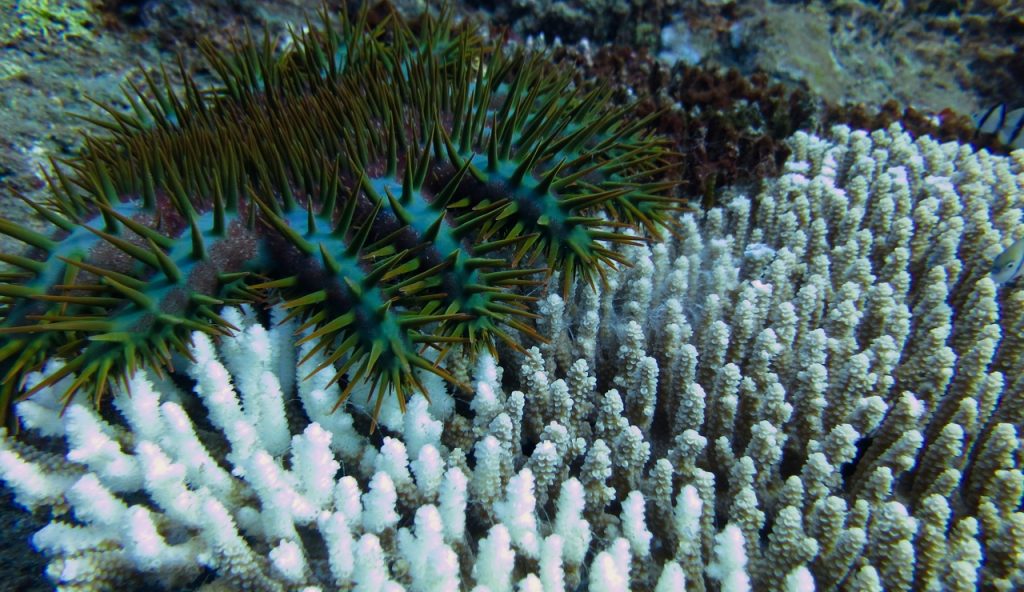 Photo source: NOAA Fisheries — Crown-of-thorns sea stars feeding on Acropora coral at Alamagan Island. Photo by NOAA Fisheries/Keisha Bahr
The Impact of the COTS Population Explosion
The destruction of coral reefs caused by COTS affects not only marine biodiversity but also human communities. Coral reefs provide habitat for countless fish species, protect the coastline from erosion, and support the livelihoods of coastal communities through fisheries and tourism. When reefs are damaged, the balance of marine ecosystems is disrupted, and the consequences can be felt for generations.
The growing population of COTS serves as a reminder that protecting the ocean is not only about cleaning beaches or restoring coral reefs, but also about understanding the delicate balance within marine ecosystems. When one part of the ecosystem is disturbed, the impact can spread throughout the entire underwater environment. Protecting ocean health ultimately means protecting the relationship between species, habitats, and the environments they depend on for future generations.
Author: Novi W. Lestari
References:
- Australian Institute of Marine Science. (n.d.). Crown-of-thorns starfish. Retrieved May 7, 2026, from https://www.aims.gov.au/research-topics/marine-life/crown-thorns-starfish
- Australian Institute of Marine Science. (n.d.). Crown-of-thorns starfish and environmental issues. Retrieved May 7, 2026, from https://www.aims.gov.au/research-topics/environmental-issues/crown-thorns-starfish
- Encyclopedia Britannica. (n.d.). Crown-of-thorns starfish. Retrieved May 7, 2026, from https://www.britannica.com/animal/crown-of-thorns-starfish
- Great Barrier Reef Foundation. (n.d.). Crown-of-thorns starfish. Retrieved May 7, 2026, from https://www.barrierreef.org/the-reef/threats/Crown-of-thorns-starfish
- Great Barrier Reef Foundation. (2021, April 14). What are crown-of-thorns starfish? Retrieved May 7, 2026, from https://www.barrierreef.org/news/explainers/what-are-crown-of-thorns-starfish
- Hurghada Environmental Protection and Conservation Association. (n.d.). Crown-of-thorns. Retrieved May 7, 2026, from https://www.hepca.org/projects/conservation/crown-of-thorns
- Marine Sanctuary. (2020, May 29). Sea wonder: Crown-of-thorns starfish. Retrieved May 7, 2026, from https://marinesanctuary.org/blog/sea-wonder-crown-of-thorns-starfish/
- National Oceanic and Atmospheric Administration Fisheries. (n.d.). Coral health and threats in the Pacific Islands. Retrieved May 7, 2026, from https://www.fisheries.noaa.gov/pacific-islands/ecosystems/coral-health-and-threats-pacific-islands
- National Oceanic and Atmospheric Administration Ocean Service. (n.d.). What is coral bleaching? Retrieved May 12, 2026, from https://oceanservice.noaa.gov/facts/coral_bleach.html
Image Source:
- Seasoldier. (2026). Seasoldier documentation archive.
- Australian Institute of Marine Science. (n.d.). Crown-of-thorns starfish [Photographs]. Retrieved May 7, 2026, from https://www.aims.gov.au/research-topics/marine-life/crown-thorns-starfish
- National Oceanic and Atmospheric Administration Fisheries. (n.d.). Coral health and threats in the Pacific Islands [Photographs]. Retrieved May 7, 2026, from https://www.fisheries.noaa.gov/pacific-islands/ecosystems/coral-health-and-threats-pacific-islands