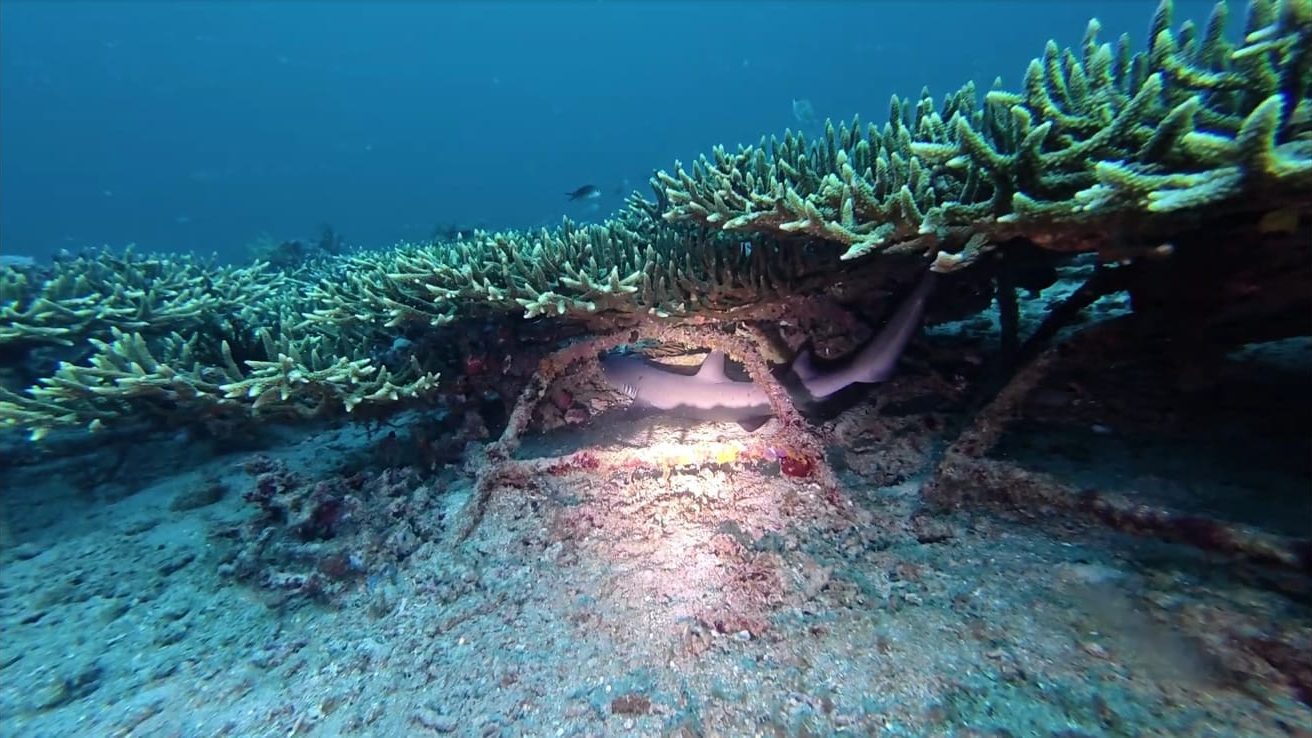
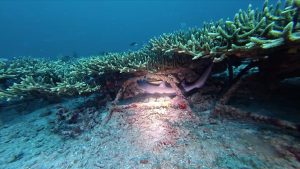
 Photo: Seasoldier Documentation. A whitetip reef shark documented within the restored coral reef habitat in Pulisan, North Sulawesi
The return of a whitetip reef shark reflects the recovery of a healthier reef ecosystem
Coral reef restoration efforts in the waters of Pulisan, North Sulawesi, are beginning to deliver tangible ecological results. As restored reef habitats continue to recover and grow, key marine species are gradually returning, including apex predators such as sharks, a positive sign that the marine food web is slowly regaining its natural balance.
The sighting of a whitetip reef shark was documented by Seasoldier’s internal field team. The shark was observed within a coral rehabilitation site that has developed into a functioning coral reef ecosystem.
The presence of the shark is far from a coincidence. As apex predators, sharks rely heavily on the availability of prey and the health of reef habitats that support a diverse range of marine life. Its presence demonstrates that coral reef restoration through coral transplantation not only rebuilds the reef’s physical structure but also helps restore the ecological relationships that sustain a healthy marine ecosystem.
This recovery did not happen overnight. Since 2021, Seasoldier, together with its partners, has been restoring coral reefs in Pulisan through coral transplantation by attaching coral fragments to artificial structures, where they can grow before developing into more established coral colonies. As part of these restoration efforts, Seasoldier has implemented several transplantation methods, including spider-frame structures and nursery tables, which provide stable platforms for coral fragments during their early stages of growth.
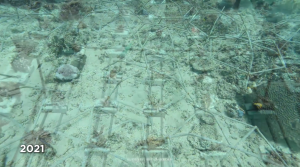
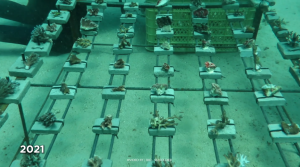 Photo: Seasoldier Documentation. Spider-frame and nursery table structures used for coral transplantation in Pulisan, North Sulawesi
Over time, the restoration site has undergone remarkable ecological changes. What was once an early-stage transplantation area has gradually developed into an active coral reef habitat, supporting a significantly higher level of marine biodiversity.
Monitoring conducted in 2023 recorded 26 coral genera, indicating that the reef framework was becoming well established. The site also supported 53 fish species that had begun using the restored reef as habitat and feeding grounds. In addition, 15 naturally recruited corals were documented, providing strong evidence that natural regeneration was underway as coral larvae successfully settled and grew on the available substrate. The monitoring also identified 24 other marine species, further reflecting the increasing ecological complexity of the restoration area.
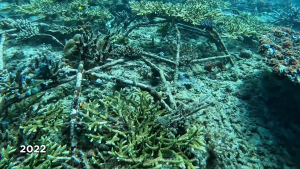
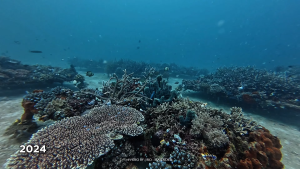 Photo: Seasoldier Documentation. The coral transplantation site in 2022 (left) and 2024 (right), illustrating the growth of coral colonies and the gradual recovery of reef habitat
Together, these findings indicate that the restoration site is not only recovering structurally but is also beginning to function once again as a healthy habitat capable of supporting a diverse range of marine life. As more species return, the ecological interactions that sustain a balanced reef ecosystem continue to become more established.
As coral colonies continue to grow, they provide shelter and feeding grounds for a wide variety of marine life. Fish populations begin to increase, creating a more reliable food source for larger predators and allowing ecological relationships that were once disrupted to gradually recover.
What is happening at the restoration site shows how closely connected a marine ecosystem truly is. Coral reefs, reef fish, mid-level predators, and sharks are all part of the same food web. As one part of the ecosystem begins to recover, the benefits gradually spread throughout the system. Coral transplantation is therefore more than restoring damaged reefs- it helps rebuild the ecological processes that sustain marine life.
This recovery did not happen by chance. Behind the return of marine life are years of dedicated work, from selecting suitable restoration methods and healthy coral fragments to carrying out routine maintenance and long-term monitoring to ensure the transplanted corals survive and continue to grow. Together, these efforts have helped create increasingly complex reef habitats capable of supporting a rich diversity of marine life.
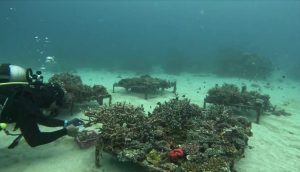
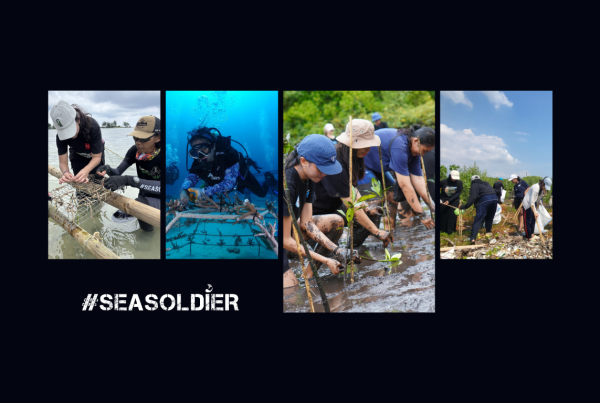
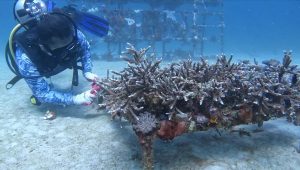 Photo: Seasoldier Documentation. Routine monitoring of transplanted corals to ensure their survival, growth, and the long-term recovery of the reef ecosystem
The restoration journey, however, has not been without challenges. In mid-2022, a cold-water event affected the rehabilitation site, making it vulnerable to both physical and biological changes. Physically, strong northern winds generated higher waves that impacted the stability of the restoration structures. At the same time, the upwelling of nutrient-rich deep water triggered sponge and algal blooms. When sponges and algae proliferate around coral colonies, they can block sunlight, interfere with the photosynthesis carried out by the corals’ symbiotic algae, and ultimately increase the risk of coral mortality.
These conditions highlight that coral reef restoration is a long-term process that requires continuous care and adaptive management. Routine monitoring and maintenance are essential to help transplanted corals withstand changing environmental conditions while ensuring that ecosystem recovery continues to progress.
The ocean is constantly changing, even when those changes are not immediately visible. It responds to every shift in its environment, including the restoration efforts taking place beneath its surface. For this reason, coral reef restoration does not end once coral fragments have been transplanted. Long-term commitment through maintenance, monitoring, and sustainable management is essential to ensure that recovering reef ecosystems continue to grow and thrive.
The return of reef sharks to Pulisan reminds us that every coral fragment planted contributes to something far greater than what can be seen at first glance. As table-shaped coral colonies continue to grow, they gradually recreate habitat for countless marine species that depend on one another for survival.
Interested in seeing this restoration journey firsthand? Watch the documentary below to explore the coral reef restoration efforts in Pulisan, North Sulawesi, from the earliest transplantation stages to the recovery of a thriving reef ecosystem.
Video Source: Official SEASOLDIER IDN YouTube Channel
Author: Novi W. Lestari