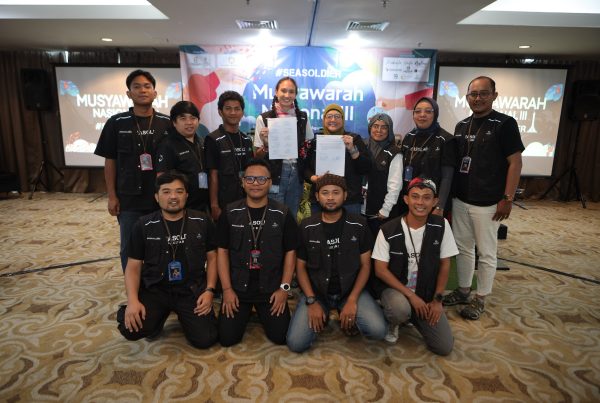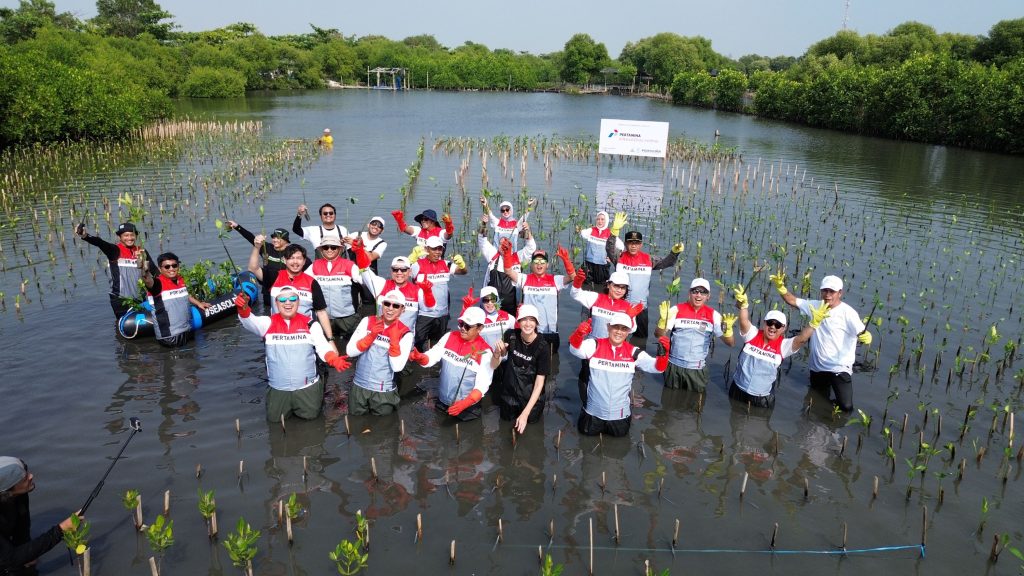
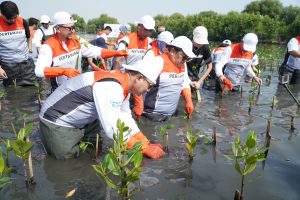
Tanjung Pasir, 27 July 2025 – Seasoldier, in collaboration with PT Pertamina International Shipping (PIS), once again demonstrated their commitment to coastal environmental conservation by planting 20,000 mangrove seedlings in Tanjung Pasir mangrove conservation area, Tangerang Regency. The event was more than just a planting ceremony; it also served as an open educational space for elementary school students—the future guardians of the Earth. They participated in a hands-on learning experience that encouraged environmental stewardship.
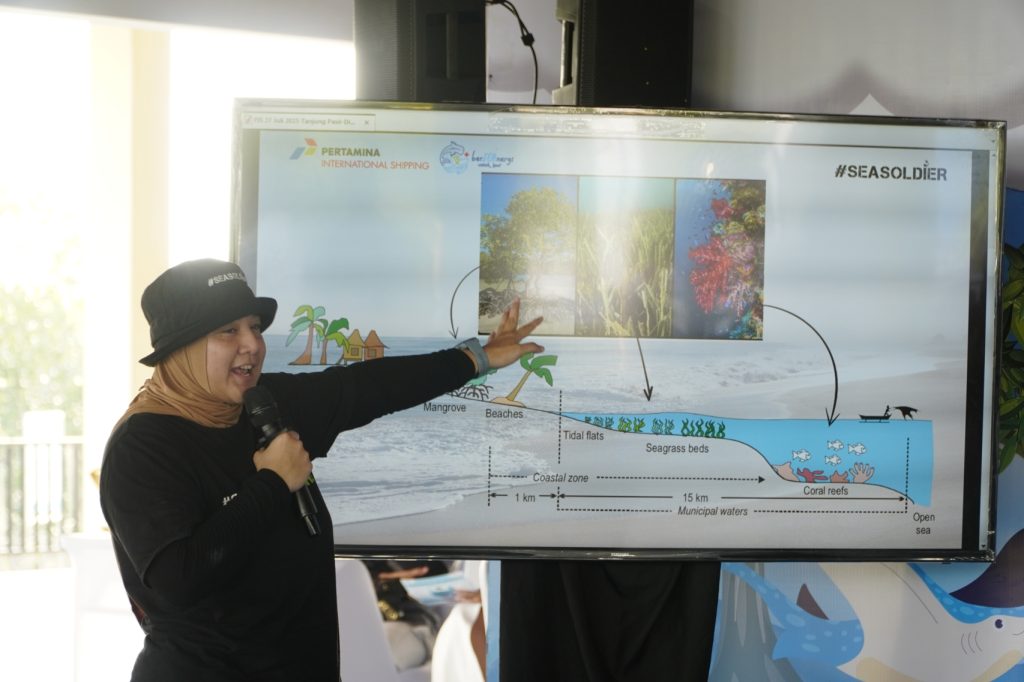
The importance of environmental conservation was introduced to children and all participants through an educational and participatory approach, with the program taking place directly on-site. They were encouraged to understand that environmental issues are not isolated but interconnected. Here, mangrove forests play a critical role as natural barriers. Their dense roots play a crucial role in preventing erosion, maintaining water quality, and withstanding extreme weather events like waves and tsunamis.
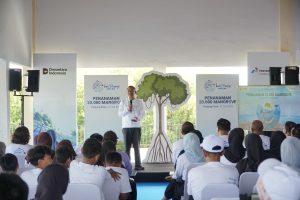
Furthermore, the children and all participants engaged in an interactive educational session themed “Blue Carbon Conservation”. It has come to their attention that mangroves are not merely trees that grow in saltwater; they are also the Earth’s silent guardians. These vital ecosystems absorb carbon, water filters, and provide habitat for thousands of species. “It is essential to provide knowledge beyond mere planting ceremonies. All participants are expected to gain a deeper understanding of the intricacies of mangrove ecosystems, which are abundant along Indonesia’s coastlines—a maritime nation,” said Dinni Septianingrum, Founder and COO of Seasoldier, who delivered the educational session before the planting activity began.
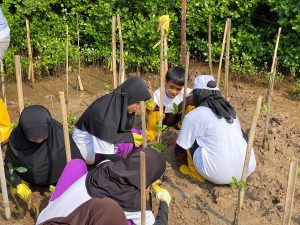
They learned not only by listening, but also by experiencing. They symbolically planted mangrove seedlings in containers filled with a planting medium that resembled mud, simulating planting in coastal conditions.
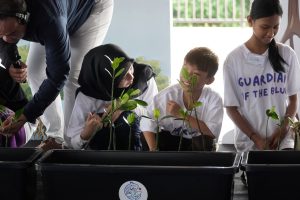
One of the most emotionally engaging moments came when children wrote down their hopes for the future of the environment on palm leaves, which they then hung on the seedlings they had just planted. This symbolic act provided an emotional outlet, reminding us that love for nature can grow from the simplest things.
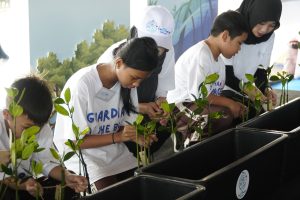
This knowledge is conveyed not only through stories and visuals, but also through hands-on practice. The children are introduced to the mangrove seedling and nursery process, from identifying seedling types, planting media and caring for the seedlings before planting them in coastal areas. They handle the propagules directly and plant them in polybags.
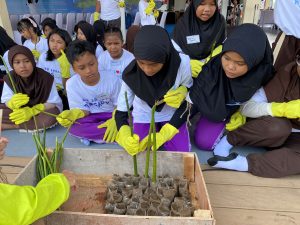
After learning about the ecological role of mangroves, the children participated in a planting activity along the coastline. They planted the seedlings one by one in the prepared land. Beforehand, they received guidance on how to correctly plant mangrove seedlings to ensure their survival and optimal growth.
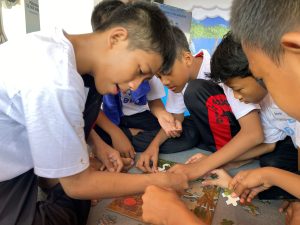
To conclude the day’s activities, the children participated in an educational game involving puzzle assembly. This activity effectively encouraged reflection on the entire learning process in a lighthearted manner and left the impression that caring for the environment can be enjoyable. An age-appropriate approach is important values more deeply and endure longer.
“Educational events packaged in a fun and lighthearted way are easier for participants to understand. Seasoldier always strives to create that atmosphere,” said Nadine Chandrawinata, founder and executive of Seasoldier.
Why focus on children? Because Seasoldier believes that building a connection between humans and nature must begin at an early age. Children are not burdened by interests; they have a pure sense of curiosity and are sensitive to nature. When they plant trees with their own hands and hang their hopes on Wishing Trees, they are not only learning about the environment; they are beginning to build a connection with it.
And why mangroves? Because they are one of the most important coastal ecosystems. They protect land from erosion, provide homes for various marine life, and absorb four times more carbon than ordinary tropical forests. In areas like Tanjung Pasir, which are vulnerable to ecological damage due to their proximity to the sea, mangroves serve as protectors and healers. Introducing mangroves to children is about more than just a tree; it’s about introducing a future worth preserving and inhabiting together.
The activities that day were all connected: learning, taking action, and hoping. Participants gained knowledge and left with an emotional imprint. Some left with smiles on their faces, while others left with a new understanding: caring for the Earth can begin with a single seed, a word of hope, and a small step toward the sea.
Author: Novi Wiji Lestari
Editor: Diyah Deviyanti