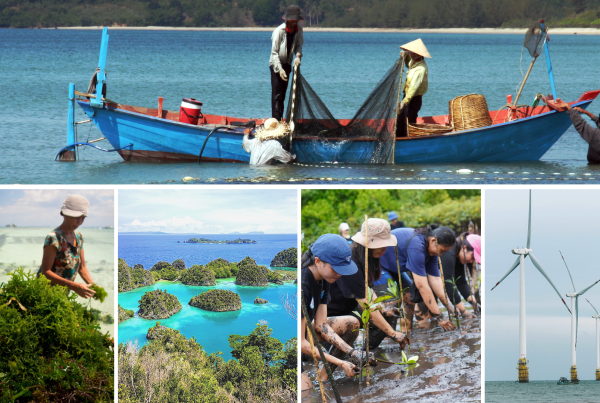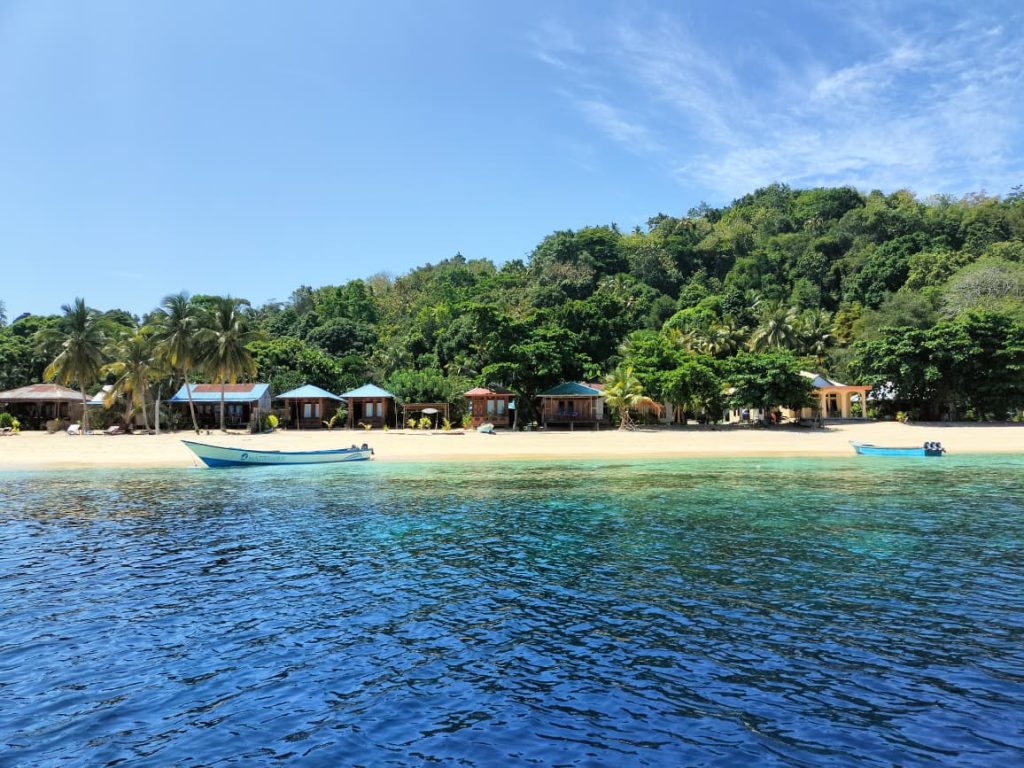
The ocean is more than a wide stretch of beautiful blue water. From a distance, its color meets the sky and extends endlessly along the horizon. Gentle waves roll toward the shore, the sea breeze carries a familiar scent, and sunlight reflects on the surface, creating a calming, iconic view. The coastline, with its sand and rocks, forms a natural landscape that supports the daily life of coastal communities.
The beauty of the sea continues beneath the surface. Coral reefs, with their vibrant shapes and colors, serve as shelter for countless species of fish and marine organisms. Seagrass meadows spread across shallow waters, while many other creatures thrive within this interconnected ecosystem. Together, they form a single system that maintains the balance of the marine environment.
Beyond its scenery, the ocean plays a crucial role in supporting human life and the planet. It provides food, regulates climate, and stabilizes coastal areas. Protecting the ocean means safeguarding one of Earth’s most essential life-support systems.
What Exists in Indonesia’s Marine Ecosystems?
Indonesia is known for having one of the richest marine biodiversities in the world. Its waters host a variety of interconnected ecosystems that support coastal communities and the open ocean. Some of the most important include:
Coral Reefs
Coral reefs serve as habitat for thousands of fish species, crustaceans, and other marine organisms. Besides being biodiversity hotspots, they act as natural barriers that protect coastlines from strong waves and storms. Because of their fragility, coral reefs are often the main focus of conservation programs, especially as they face threats from pollution, warming seas, and destructive human activities.
Indonesia is part of the Coral Triangle, a global marine biodiversity center shared with Malaysia, the Philippines, Papua New Guinea, Solomon Islands, and Timor-Leste. This region hosts about 76% of the world’s coral species, with more than 600 reef-building corals, over 2,000 reef fish species, and 6 of the world’s 7 sea turtle species.

Seagrass Meadows
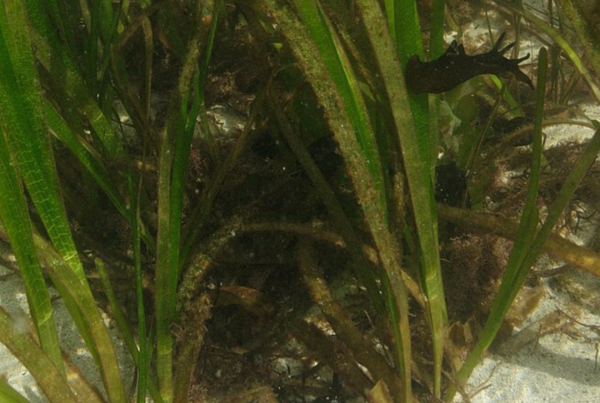
Seagrass meadows provide feeding grounds, nursery areas, and shelter for various marine species, including juvenile fish and protected animals. They also store carbon and help maintain water quality. Although often overlooked, seagrass has a major ecological role in supporting healthy coastal systems.
Indonesia is recognized as a global center of seagrass diversity and is estimated to hold around 5%–10% of the world’s total seagrass area. According to the Research Center for Oceanography–BRIN, only 293,464 hectares have been fully mapped—representing just 16%–35% of the estimated true potential.

Mangroves
Mangrove ecosystems act as natural coastal defenses. Their roots stabilize shorelines, reduce wave energy, and prevent saltwater intrusion. They also serve as nurseries for fish, crabs, birds, and many other species, while functioning as one of the world’s most efficient carbon sinks.
Indonesia has approximately 3.36 million hectares of mangroves, about 20–25% of the world’s total, making it the country with the largest mangrove coverage.
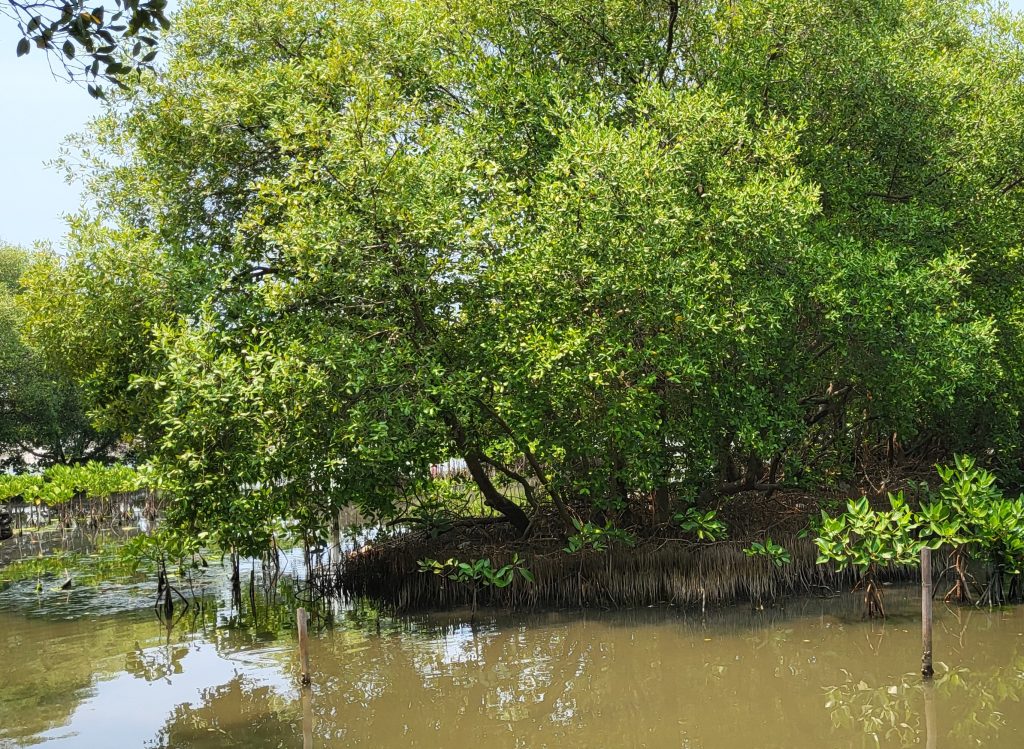
These three ecosystems, coral reefs, seagrass, and mangroves, form a natural, interconnected protection system. Coral reefs break waves offshore, seagrass stabilizes sediments and maintains water clarity, and mangroves protect the land from erosion and tidal flooding. When even one of these ecosystems is damaged, the entire coastal system becomes more vulnerable to environmental degradation and climate impacts.
What Happens When We Protect Our Oceans and Coastal?
Caring for the marine environment benefits both nature and people, ensuring that coastal ecosystems continue to function effectively and sustainably. When habitats remain healthy, marine species can grow, reproduce, and maintain stable food webs, creating ecosystems that are more resilient to temperature shifts and human pressures. Intact coral reefs, seagrass meadows, and mangroves also provide natural protection by reducing storm impacts, stabilizing coastlines, and shielding coastal communities from extreme waves and rising sea levels. These healthy ecosystems also support sustainable livelihoods, enabling stable fish populations, responsible fisheries, and eco-tourism activities such as mangrove tours, snorkeling, and diving, offering long-term economic opportunities for local communities. Beyond ecological and economic benefits, healthy marine environments improve overall environmental quality and human well-being by helping regulate the global climate, producing much of the Earth’s oxygen, and reducing contamination risks in the seafood people consume.
What Happens If We Fail to Protect the Ocean and Coastal?
Neglecting the marine environment brings consequences that reach far beyond the sea and directly impact human life. The loss of marine species and the collapse of biodiversity occur when overfishing, habitat destruction, and pollution disrupt entire food chains. As mangroves and coral reefs degrade, coastlines become increasingly vulnerable to stronger waves, leading to more severe erosion, tidal flooding, and costly infrastructure damage; in the long term, some coastal areas may even become uninhabitable, with cities like Jakarta and Semarang often cited as among the most at risk of sinking due to land subsidence and rising sea levels.
Damage to marine ecosystems also results in declining fish stocks, forcing fishers to travel farther for smaller catches and threatening both food security and local livelihoods. At the same time, marine debris, especially microplastics, accumulates in the food chain and ultimately returns to humans through seafood consumption, posing significant health risks. The destruction of mangroves, seagrass beds, and coral reefs further accelerates climate change by weakening the ocean’s capacity to store carbon, contributing to global warming and extreme climate events. Ultimately, environmental degradation today deprives future generations of the opportunity to experience and benefit from Indonesia’s extraordinary marine heritage.
What Can We Do to Protect the Ocean and Coastal?
Everyone has a role in sustaining ocean health, and simple, consistent actions can create meaningful long-term impact. Reducing single-use plastic by using reusable shopping bags, refillable bottles, and personal food containers significantly lowers the amount of waste that ends up in the sea. Practicing responsible fishing by avoiding destructive gear, respecting size limits, and releasing protected species supports sustainable fish populations.
When engaging in marine activities such as snorkeling or diving, it is crucial to avoid touching or stepping on coral reefs, as even small damage can take decades to recover. Stopping the dumping of waste into rivers and the ocean is equally important, since anything dumped into rivers will eventually flow into the sea, harming water quality and marine life. Supporting local conservation efforts through mangrove planting, reef rehabilitation, beach cleanups, or community-led programs strengthens collective action for a healthier coastline. Promoting education and awareness rooted in scientific knowledge also inspires behavioral change and builds stronger community support.
Efforts to protect the ocean, ranging from beach clean-ups, mangrove planting, seagrass restoration, and coral transplantation to campaigns that reduce plastic waste, show that marine conservation requires collaboration from many groups: communities, students, businesses, and government institutions. This shared participation reinforces the idea that protecting the sea is not the duty of a selected few; it is a collective responsibility that must be carried out sustainably. Every choice we make in daily life, how we shop, manage waste, and use marine resources, shapes the future condition of our ecosystems. When the ocean is damaged and polluted, the impacts do not stay in the water; they return to us as environmental crises, food insecurity, and growing health risks.
Protecting the ocean means protecting ourselves. Coral reefs, mangroves, and seagrass meadows act as natural defense systems that shield coastlines, maintain water quality, and support millions of marine organisms that also serve as a food source for humans. When we safeguard nature, nature safeguards us in return: coastlines stay protected from erosion and flooding, air and water remain clean, and marine resources remain sustainable. On the other hand, if we neglect these ecosystems, human-made waste and toxic pollutants will accumulate in marine life and eventually enter our bodies through the food chain.
Choosing not to dump waste into the environment, reducing single-use plastics, supporting ocean-friendly practices, and joining initiatives that preserve coastal ecosystems are all concrete steps to break the cycle of degradation and ensure that the ocean continues to sustain life for today’s generation and those to come.
Writer: Novi Wiji Lestari
Editor: Diyah Devayanti
References:
Grehenson, G. (2022, August 31). UGM dorong riset ketersediaan data padang lamun Indonesia. Universitas Gadjah Mada. Retrieved December 9, 2025, from https://ugm.ac.id/id/berita/22880-ugm-dorong-riset-ketersediaan-data-padang-lamun-indonesia/ Universitas Gadjah Mada
WWF Asia-Pacific. (n.d.). Coral Triangle. Retrieved December 9, 2025, from https://asiapacific.panda.org/priority_places/coral_triangle/ asiapacific.panda.org