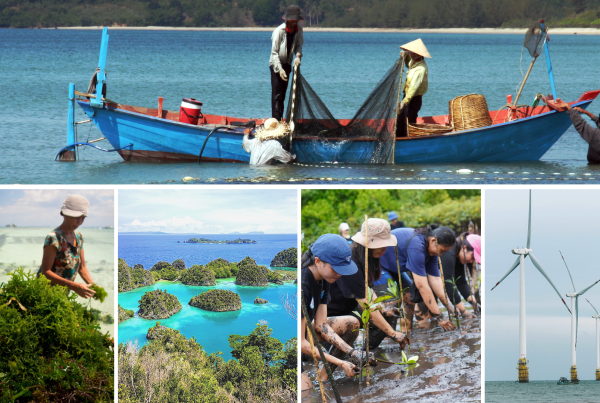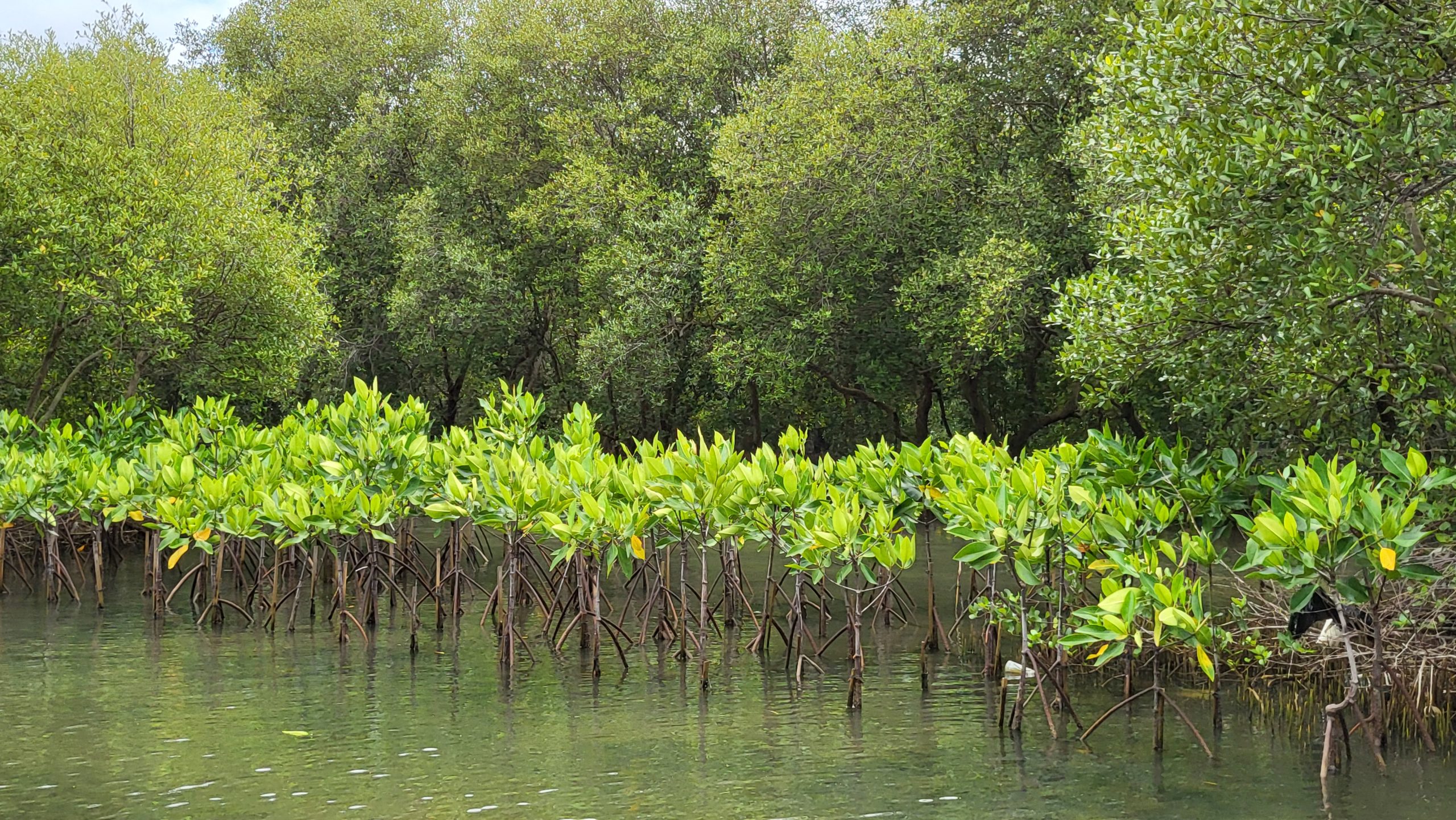
Known as an archipelago with a larger sea area than land area, coastal ecosystems are easily found in Indonesia. One of them is the mangrove forest, the most important ecosystem in the world. It plays a role in storing blue carbon to mitigate climate change and provides a habitat for marine and terrestrial biodiversity. Not only that, mangrove ecosystems also play an important role in the socio-economic life of coastal communities, especially in terms of livelihoods.
Indonesia is the country with the second-largest mangrove forest in the world. According to the official website of the Ministry of Environment, the area of mangroves in Indonesia reaches 3.44 million hectares – more than 20% of the global mangrove ecosystem in 2025. However, this area is decreasing every year.
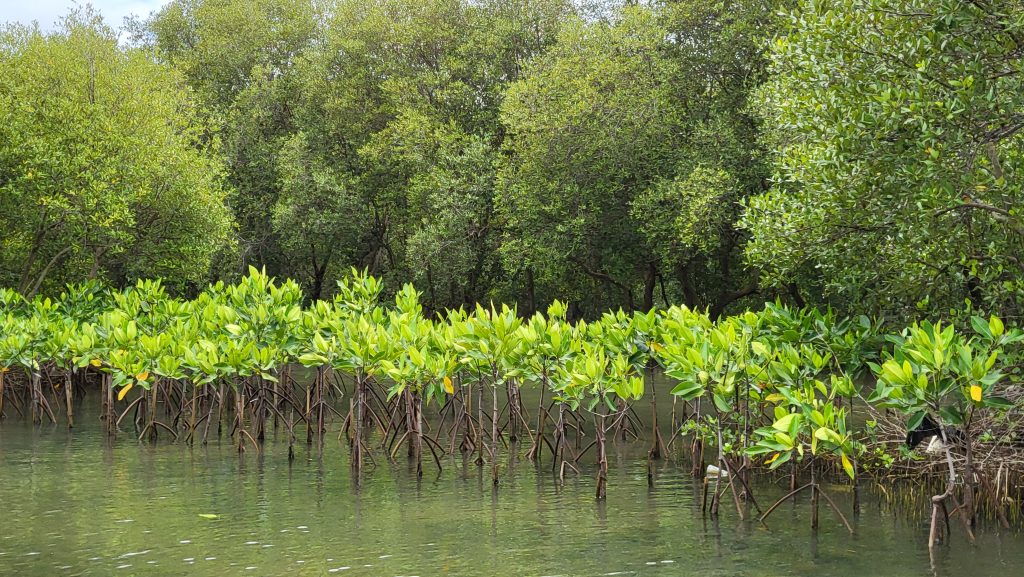
How is the condition of mangroves in Indonesia?
Looking back, the area of mangroves in Indonesia in 2021 was 3.63 million hectares (BPS, 2021). The decline continues due to the rate of mangrove forest degradation not being matched by mangrove rehabilitation efforts. Some of them have been damaged due to conversion into shrimp farms.
For example, in 2013, the government established a shrimp revival programme targeting the mangrove forests of South Sulawesi. According to Mongabay, this conversion to shrimp farms has the potential to damage mangrove forests, with the potential for farms, according to the government, reaching 2.9 million hectares.
This also occurs on the coast of West Sulawesi. In 2022, mangrove forests were damaged by illegal logging. Mangrove land was converted into shrimp farms, while the wood was used as firewood. According to a Mongabay report, shrimp farm expansion also occurred in South Sulawesi, North Sulawesi, Kalimantan, Sumatra, and Nusa Tenggara.
In Kalimantan, the conversion of mangrove land did not stop at shrimp farms alone. Urban expansion and infrastructure development also play a part. Hans Nicholas Jong, in his article Wildlife-rich mangroves suffer as Indonesia ramps up construction of new capital (2025), mentions that the construction of the new capital city of Nusantara covers an area of 3,000 hectares of mangrove forest stretching between Balikpapan Bay and the mouth of the Mahakam River.
The hastily constructed ports along the mangrove coast and the removal of materials using large barges have contributed to the destruction of the mangroves. According to a report by Greenpeace Indonesia, mangroves along the upper reaches of Balikpapan Bay have also been cleared to make way for heavy equipment.
Unlike Kalimantan, the mangrove forests of Kwala Langkat Village, Langkat, North Sumatra, are threatened by palm oil expansion. There, the mangrove ecosystem, which serves as an economic and ecological buffer for residents, has been converted into palm oil plantations. Residents of Langkat Village told Mongabay how they had to move upstream due to rising sea levels and seawater entering their settlements since the land conversion. In addition, residents are finding it difficult to catch fish.
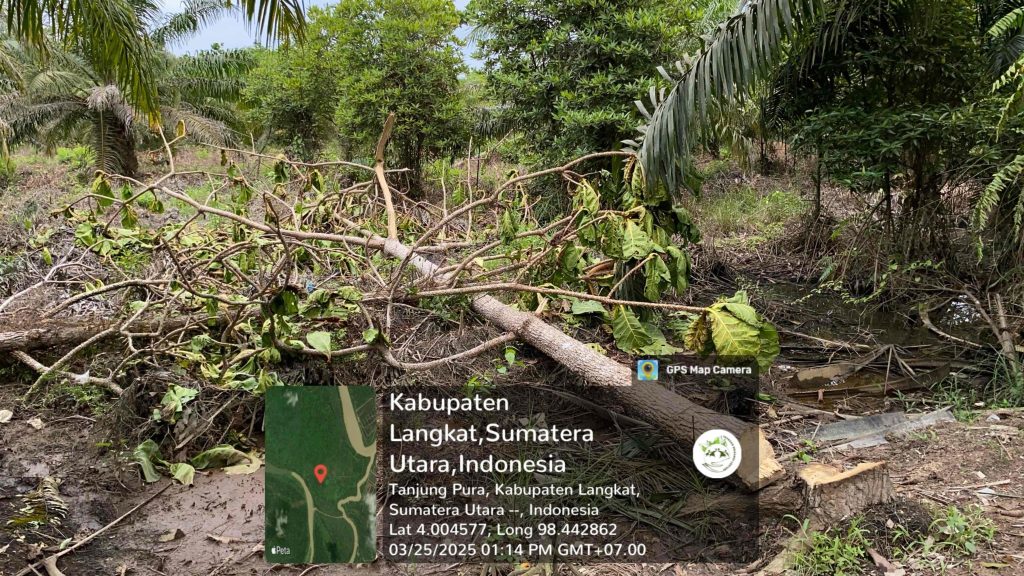 Mangrove forest destruction in Kwala Serapuh Village, Langkat Regency, North Sumatra.
Source: WALHI North Sumatra.
Another story comes from Papua, specifically from Youtefa Bay, where the brackish sea water and five rivers in Papua meet. Since the construction of a road and bridge to Jayapura that passes through the Enggros pier, the forest area has shrunk by hectares. This includes the mangrove forest in Youtefa Bay, which now covers less than 514 hectares.
According to AP News, this development has resulted in pollution that threatens the traditions and health of Youtefa Bay. The community often sees plastic bottles, tarpaulins, and pieces of wood among the mangrove roots. In addition, the water around the mangrove forest is polluted and murky. One resident also said that he had to feel around for rubbish first when looking for shellfish in the mangrove forest waters.
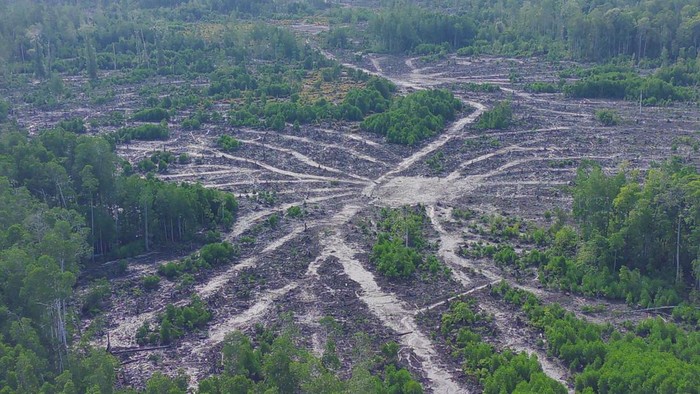 Mangrove forest damage in Teluk Bintuni, West Papua, allegedly caused by industrial activities.
Source: detikcom
Preserving the mangrove ecosystem is a shared responsibility
Communities affected by mangrove forest destruction have chosen not to remain silent. One such community is Pasijah and his family, who live in Rejosari Senik, on the coast of Demak—dry land that is now submerged in water. They have chosen to remain there even though the sea continues to expand. According to Reuters, Pasijah has planted around 15,000 mangroves over the past two decades. He did this together with his family to protect their homes from tidal flooding.
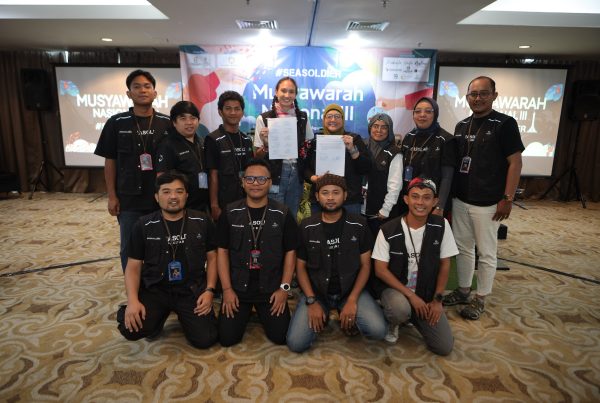
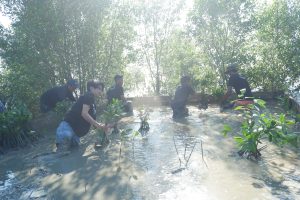
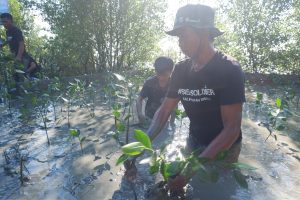
Not only the community, but several other communities and organisations are also working to conserve mangroves in order to restore the ecosystem. Seasoldier, a non-governmental organisation, is participating in mangrove advocacy and conservation. By 2025, Seasoldier will be managing 16 conservation sites in collaboration with local communities, focusing on the restoration and protection of mangrove forests. This commitment is driven by the belief that mangrove ecosystems play a vital role in coastal defence, supporting marine and terrestrial life, as well as the people who live on the coast.
So, how is the government responding to this?
The Indonesian government has set annual mangrove rehabilitation targets. In 2023, the government established a special agency, the Peat and Mangrove Restoration Agency (BRGM), through Presidential Regulation No. 120 of 2020 concerning the Peat and Mangrove Restoration Agency. Quoting from a release by the Ministry of Environment and Forestry, the BRGM has been given a target of accelerating the rehabilitation of 600,000 hectares of mangrove ecosystems.
By 2025, the Ministry of Forestry (Kemenhut) targets to rehabilitate 15,387 hectares of mangroves. This statement was made by the Minister of Forestry, Raja Juli Antoni, at the Kick off Mangroves for Coastal Resilience in Medan, North Sumatra (10/9/2025). According to a press release from the Ministry of Forestry, mangrove rehabilitation will be carried out in four priority provinces, namely Riau, North Sumatra, East Kalimantan, and North Kalimantan, with a target area of 41,000 hectares by 2027.
In the same year, the government also issued a new regulation, namely Government Regulation (PP) Number 27 of 2025 concerning the Protection and Management of Mangrove Ecosystems. This effort was made to strengthen evidence-based and sustainability-oriented environmental governance. According to a report by Green Network Asia, there are several important points highlighted in the regulation:
- the obligation of business owners to prevent, mitigate, and restore damaged mangrove forests
- the rights and opportunities for communities to participate
- the role of mangroves in supporting the circular economy through mangrove products
- strengthening the function of mangroves as carbon sinks to achieve national climate targets
The Ministry of Forestry also stated that it would no longer issue permits for logging activities in mangrove ecosystems. Quoting Antara, this statement was made by the Director of Mangrove Rehabilitation at the Ministry of Forestry, Ristianto Pribadi (16/4/25), during the Mangrove Breakthrough discussion. Ristianto added that permits are prioritised for environmental services such as Non-Timber Forest Products (NTFP) and ecotourism.
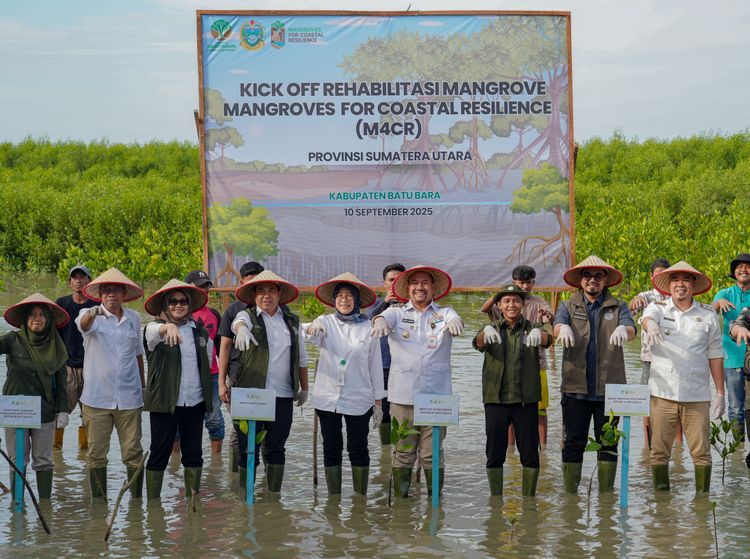 Mangrove planting program targeting 15,387 hectares in four provinces in 2025.
Source: Ministry of Environment and Forestry of the Republic of Indonesia
The process of restoring mangrove ecosystems is a long journey. We can also share information and education with others to raise awareness of the importance of mangroves. We must also continue to monitor government policies to ensure that mangrove protection measures are implemented.
Restoring mangrove ecosystems is not an instant process, but a long journey that requires consistency and collaboration. As members of the public, we can play a role by supporting organisations and communities actively involved in mangrove advocacy and conservation. Additionally, sharing environmental information and education can be a simple step you can take. Public participation is also crucial in monitoring government policies to ensure mangrove protection is not merely a policy on paper but is genuinely implemented on the ground.
Author: Amanda Andina
References:
ANTARA News. (2025, April 16). Ministry of Forestry: No more permits for logging in mangrove areas. https://www.antaranews.com/berita/4774849/kemenhut-tidak-ada-lagi-izin-penebangan-kayu-di-kawasan-mangrove#:~:text=Kemenhut:%20Tidak%20ada%20lagi%20izin%20penebangan%20kayu,Marves%20perluas%20kerja%20sama%20rehabilitasi%20mangrove%20BUMN%2Dswasta.
Associated Press. (2024, November 21). Indonesian women protect forests and mangroves in Papua. https://apnews.com/article/indonesia-papua-women-forest-mangrove-5b754d80dca3b420b821fe4040999dd6
Green Network Asia. (2026, Januari 15). Looking into the government regulation on the protection and management of mangrove ecosystems in Indonesia. https://greennetwork.asia/soft-news/looking-into-the-government-regulation-on-the-protection-and-management-of-mangrove-ecosystems-in-indonesia/
Greenpeace Southeast Asia. (2024, August 17). Indonesia is not for sale: Message to Jokowi during celebration at the new capital city. https://www.greenpeace.org/southeastasia/press/66427/indonesia-is-not-for-sale-message-to-jokowi-during-celebration-at-new-capital-city/
Ministry of Environment and Forestry of the Republic of Indonesia. (2025, October 27). Minister of environment, with the support of the vice president of Indonesia, reaffirms commitment to protecting mangrove ecosystems for the future of the planet. https://kemenlh.go.id/news/detail/menteri-lingkungan-hidup-dengan-dukungan-wakil-presiden-indonesia-tegaskan-komitmen-perlindungan-ekosistem-mangrove-untuk-masa-depan-bumi
Mongabay. (2014, March 26). Government policies trigger mangrove forest degradation. https://mongabay.co.id/2014/03/26/kebijakan-pemerintah-picu-degradasi-hutan-mangrove/
Mongabay. (2021, July 29). The rate of mangrove forest degradation is not comparable to rehabilitation efforts. https://mongabay.co.id/2021/07/29/laju-degradasi-hutan-mangrove-tak-sebanding-dengan-upaya-rehabilitasi/
Mongabay. (2025, February 13). Disasters and conflicts triggered: Stop palm oil expansion. https://mongabay.co.id/2025/02/13/picu-bencana-dan-konflik-setop-ekspansi-sawit/
Mongabay. (2024, September 3). Wildlife-rich mangroves suffer as Indonesia ramps up construction of new capital. https://news.mongabay.com/2024/09/wildlife-rich-mangroves-suffer-as-indonesia-ramps-up-construction-of-new-capital/
Reuters. (2025, April 18). Indonesian woman turns to mangroves to fend off rising tides. https://www.reuters.com/world/asia-pacific/indonesian-woman-turns-mangroves-fend-off-rising-tides-2025-04-18/
Image References:
detikcom. (2023). Mangrove forest in Papua damaged allegedly due to industrial activities, provincial government investigates [Photograph]. https://www.detik.com/sulsel/berita/d-6912526/hutan-mangrove-di-papua-rusak-diduga-karena-aktivitas-industri-pemprov-usut
Ministry of Environment and Forestry of the Republic of Indonesia. (2025). Minister of forestry targets mangrove planting of 15,387 hectares in four provinces in 2025 [Photograph]. https://www.kehutanan.go.id/news/menhut-targetkan-penanaman-mangrove-15-387-hektare-di-4-provinsi-selama-2025
WALHI North Sumatra. (n.d.). Investigate those involved in the destruction of mangrove forests in Kwala Serapuh Village, Langkat Regency [Photograph]. https://walhisumut.or.id/usut-tuntas-oknum-oknum-yang-terlibat-dalam-pengerusakan-hutan-mangrove-di-desa-kwala-serapuh-kabupaten-langkat/