Coastal ecosystem restoration is often associated with planting activities or rehabilitation efforts as the final stage of a conservation program. In reality, these actions represent only the beginning of a much longer process aimed at ensuring the long-term sustainability of coastal ecosystems. Initiatives such as mangrove planting, coral transplantation, and seagrass rehabilitation are frequently viewed as immediate responses to environmental degradation. However, these efforts do not automatically guarantee successful recovery without well-planned and continuous management. Without consistent monitoring and proper maintenance, newly planted seedlings, transplanted coral fragments, or restored seagrass meadows remain highly vulnerable to damage, stunted growth, or even total failure due to environmental pressures and human activities.
For this reason, monitoring and maintenance play a critical role in determining the success and sustainability of restoration initiatives. Regular monitoring enables conservation teams to systematically evaluate ecosystem progress, including survival rates, growth patterns, organism health, and changes in surrounding environmental conditions. At the same time, maintenance activities help ensure that restoration sites remain suitable for growth by addressing potential disturbances, such as clearing debris, repairing supporting structures, and managing factors that may hinder ecosystem recovery. Through these ongoing efforts, restoration evolves beyond a one-time intervention into a continuous process that strengthens the resilience of coastal ecosystems.
In every conservation initiative carried out by the Seasoldier, monitoring and maintenance are treated as essential components of the restoration process. After planting or rehabilitation activities are completed, monitoring and site maintenance continue for at least one year. This period is considered crucial for allowing restored coastal ecosystems to adapt to their environment and establish stable early growth over time. The data collected during this phase not only helps identify environmental changes and challenges at an early stage but also serves as an important evaluation tool to assess the effectiveness of restoration methods and strengthen the design of future conservation programs.
Through this approach, restoration success is not measured solely by the number of ecosystems planted, but by their ability to survive, adapt, and sustain their ecological functions. In practice, monitoring and maintenance activities are conducted using approaches tailored to the ecological characteristics of coastal habitats, including mangrove forests, coral reefs, and seagrass meadows.
Mangrove Monitoring and Maintenance

Monitoring and maintenance in mangrove ecosystems are conducted to ensure that newly planted seedlings grow properly, particularly during the early stages of development, when they are highly vulnerable to environmental stress. Natural factors such as tidal fluctuations, water currents, wave action, and marine debris can affect the stability of mangrove seedlings in the field. These conditions may cause seedlings to tilt, collapse, become buried by sediment or debris, or experience other disturbances that can hinder their growth. For this reason, regular monitoring is essential to ensure that the seedlings remain stable and adapt to the surrounding environmental conditions.
In addition to routine monitoring, maintenance activities are also conducted to support the continued growth and survival of mangrove seedlings. When seedlings are found leaning or failing due to strong currents or waves, they are carefully re-secured to wooden stakes that function as support structures, allowing them to grow upright. In certain cases, where seedlings experience severe damage such as breakage or mortality, replacement planting is carried out through a process locally known as tambal sulam, or gap-filling. Maintenance efforts also include cleaning the area around the seedling, such as removing debris, algae, or other materials attached to the stems and leaves that may obstruct healthy growth.


Alongside maintenance activities, monitoring also involves the systematic collection of data on mangrove seedling growth. Several parameters are measured to track development over time, including seedling height from base to tip, the number of leaves produced, and water levels at the planting site, which can influence mangrove growth and survival. These measurements are conducted every two months to observe the gradual progress of seedling development.


All data gathered through these monitoring activities are compiled into a conservation database. Field observations and progress reports are documented every two months, while a more comprehensive evaluation is conducted by comparing growth data collected over the one-year monitoring period. At the end of the program, the results are analyzed and presented in the form of tables and visual diagrams to provide a clearer, more systematic overview of ecosystem development. This analysis forms part of the final report, serving as an evaluation of the effectiveness and outcomes of the mangrove restoration efforts.
Coral Reef Monitoring and Maintenance

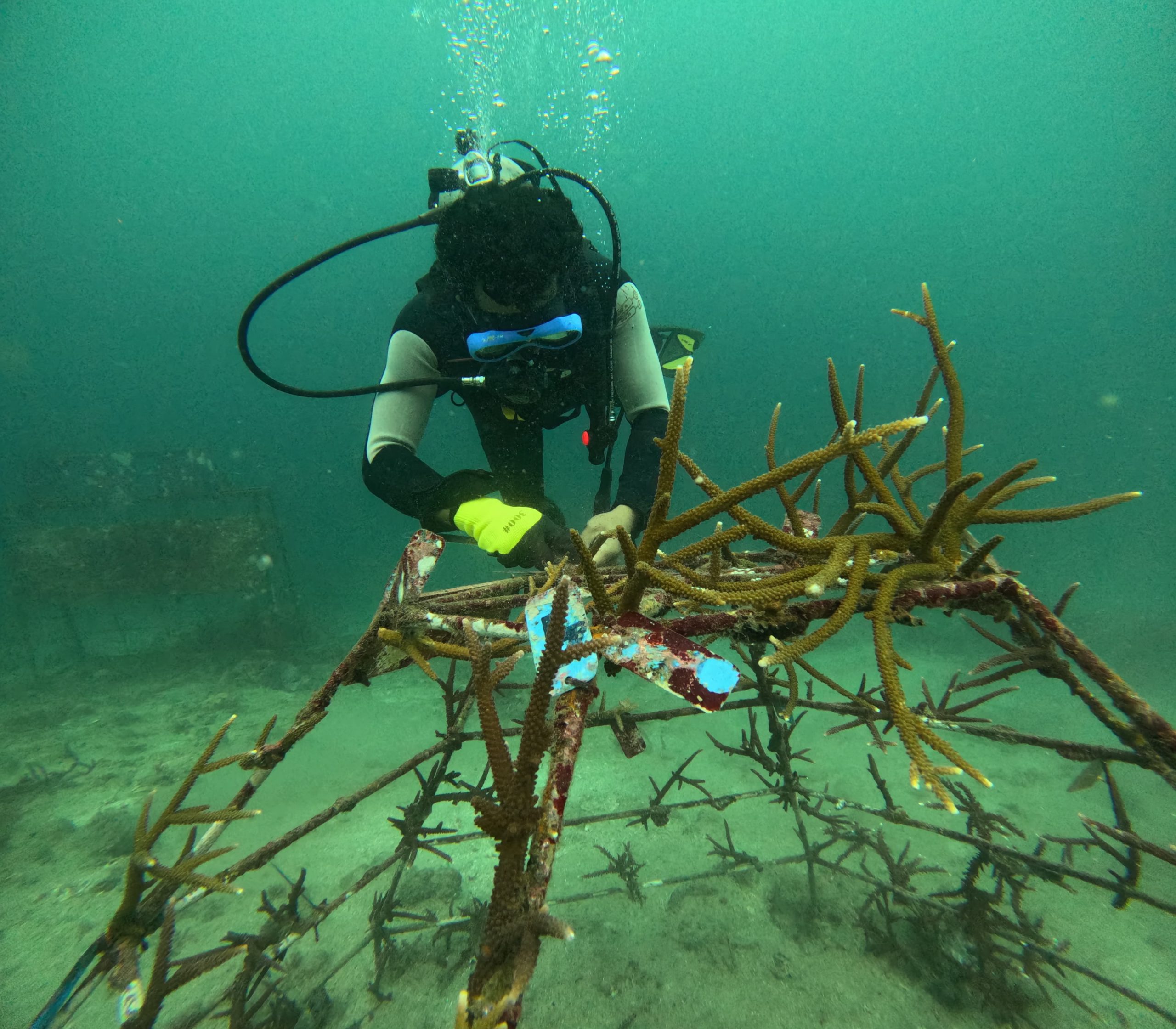
Monitoring and maintenance in coral reef transplantation activities are conducted to ensure that both the supporting structures and the transplanted coral fragments remain stable and are able to grow properly. The first step in this process involves inspecting the condition of the transplanted structures and the coral fragments previously attached. This inspection focuses on ensuring that each fragment remains securely fastened to the structure using adhesive materials or cable ties. During the early stages of transplantation, particularly within the first one to three months, these bindings may loosen due to water currents, wave movement, or natural changes in the coral fragments as they begin to grow. In some cases, the section of coral held by the cable ties may also narrow over time, which can weaken the attachment and make the fragment unstable. For this reason, a key priority of monitoring activities is to ensure that each coral fragment remains firmly secured and properly positioned so that it does not detach or fall to the base of the structure.


In addition to maintaining structural stability, maintenance efforts also include removing organisms that may hinder coral growth. Certain marine species, such as sponges and ascidians, often grow around or directly on coral fragments. These organisms can compete with coral for space and may cover their surface, blocking the sunlight required for the photosynthesis process carried out by symbiotic zooxanthellae. If left unmanaged, this competition can slow coral growth and, in some cases, lead to the death of coral fragments. Therefore, the regular removal of these competing organisms is an essential part of maintaining optimal conditions for coral development and ensuring the success of reef restoration efforts.
Monitoring activities also include the systematic collection of coral growth data, which is compared with baseline measurements recorded during the initial transplantation phase. The parameters observed include branch length and the number of coral branches. These measurements are conducted every three months to track gradual progress, resulting in four monitoring cycles each year. This regular observation allows practitioners to identify coral growth trends and evaluate the overall development of the transplanted reef over time.
In addition to documenting growth, monitoring also aims to assess the survival rate of coral fragments. Each fragment, whether alive or deceased, is recorded systematically, including notes on possible causes of mortality. This information is essential for evaluating the effectiveness of transplantation techniques and understanding the environmental and biological factors that influence restoration success.


Another indicator observed during monitoring is the presence of marine life around the transplantation structures. The appearance of organisms such as reef fish, cuttlefish, octopus, crabs, and other small marine species suggests that the area is beginning to form a new habitat. The presence of these species reflects the early stages of ecological interaction between coral reefs, marine organisms, and the surrounding environment. Over time, this process has the potential to support the development of a stable and productive ecosystem, which may eventually become an important habitat for various fish species.

In the long term, healthy coral reef ecosystems not only sustain marine biodiversity but also provide significant benefits for coastal communities, particularly as a source of fisheries resources. However, the utilization of these resources must be accompanied by environmentally responsible fishing practices to ensure that coral reef habitats remain protected. Through consistent monitoring and long-term maintenance, coral reef transplantation initiatives are expected to contribute to the establishment of resilient marine ecosystems that support the sustainability of ocean resources for the future.
Seagrass Monitoring and Maintenance

Seagrass meadows in many coastal regions have experienced significant degradation due to coastal erosion, shoreline development, and unsustainable fishing practices. One of the most damaging activities frequently observed is the use of destructive fishing gear such as bottom trawls, which drag across the seabed. This practice not only damages coral reefs but also uproots seagrass from the substrate, leading to the deterioration and loss of seagrass meadow habitats.
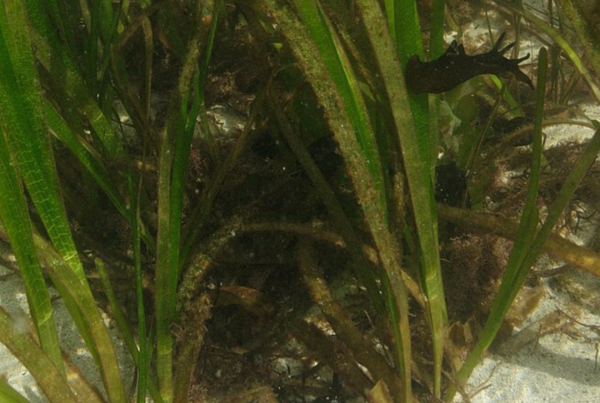
To help restore these ecosystems, seagrass rehabilitation efforts are carried out using healthy seagrass shoots collected from existing meadows. The process begins with careful sampling, where seagrass individuals in good condition are selected and cut to a specific size while preserving their roots and rhizomes. Maintaining these parts is essential, as they allow the seagrass to anchor itself to the substrate and continue growing once transplanted to restoration sites.
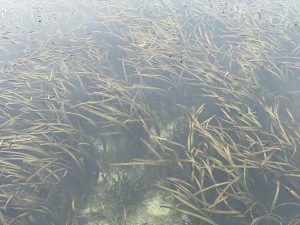

The replanting process is then conducted in areas where seagrass meadows have been damaged, with methods adapted to the site-specific environmental conditions. In deeper waters, planting is typically carried out by divers who create small holes in the substrate using specialized digging tools before carefully placing the seagrass shoots into the seabed. In shallower areas, transplantation can be done more directly by inserting the shoots into the substrate using simple tools such as metal rods or other pointed instruments. This approach helps ensure that the transplanted seagrass becomes securely embedded in the seabed, increasing its chances of survival and allowing new seagrass meadows to gradually develop.


Through these rehabilitation efforts, degraded seagrass areas are expected to recover over time and regain their ecological functions. Seagrass meadows play a vital role in coastal ecosystems, providing shelter and feeding grounds for a wide range of marine species. In addition, they help stabilize the seabed and contribute to maintaining the overall balance and health of the coastal marine environment.
Sustaining coastal ecosystem recovery requires more than initial planting or rehabilitation activities in the field; it also requires a long-term commitment through continuous monitoring and maintenance. As demonstrated in the restoration efforts across mangrove forests, coral reefs, and seagrass meadows, the success of these initiatives largely depends on how ecosystems are monitored, maintained, and managed after the initial restoration phase. Monitoring enables conservation teams to detect environmental changes and ecosystem development at an early stage, allowing for timely and appropriate interventions to support the survival and growth of restored habitats.
Over time, recovering coastal ecosystems gradually rebuild their ecological functions and begin to create habitats that support diverse marine life. Through consistent monitoring and collaborative efforts among various stakeholders, restoration initiatives not only contribute to environmental recovery but also strengthen coastal resilience and provide long-term benefits for nature and the communities that depend on marine resources.
Author: Novi Wiji Lestari