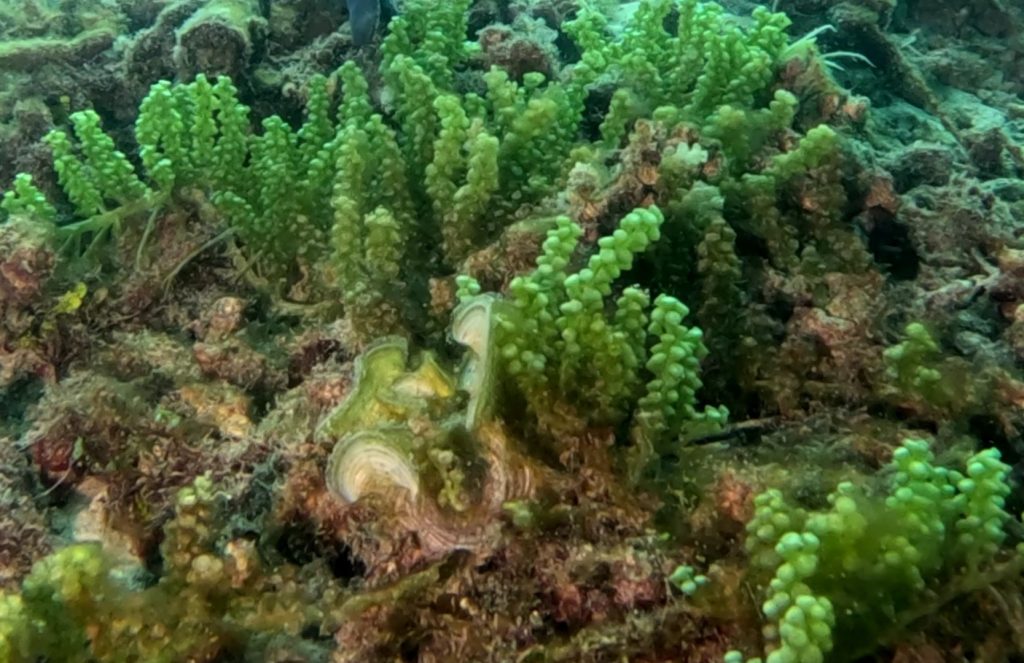
 Photo: Seasoldier Documentation
Getting to Know Sea Grapes (Caulerpa sp.)
Hidden beneath tropical coastal waters is a unique marine treasure often called seagrapes. Long valued as a food source by coastal communities, these marine algae have gained increasing attention for their nutritional value, bioactive potential, economic opportunities, and contribution to sustainable coastal livelihoods.
Sea grapes belong to the genus Caulerpa, a group of green marine algae within the division Chlorophyta and the family Caulerpaceae. This genus is widely distributed across tropical and subtropical coastal waters and is recognized as one of the most diverse groups of green seaweeds.
Unlike terrestrial plants, Caulerpa does not possess true roots, stems, or leaves. Instead, its body consists of a coenocytic thallus, a unique alga structure formed by a continuous mass of cytoplasm containing multiple nuclei without internal cell walls. This distinctive organization allows the algae to absorb nutrients directly from the surrounding water while supporting a wide variety of growth forms.
Members of the genus Caulerpa exhibit remarkable morphological diversity. They grow through creeping stolons, which function similarly to horizontal stems and are anchored to substrates by rhizoids. These rhizoids help the algae attach to sandy bottoms, coral rubble, rocky surfaces, and seagrass beds. From the stolons emerge upright structures that can resemble leaves, branches, or other plant-like forms depending on the species.
Some species display leaf-like fronds, while others develop branching structures or clusters of small bead-like vesicles. Beyond their distinctive appearance, several Caulerpa species have long been consumed as food in various Asian countries due to their fresh texture and nutritional value.
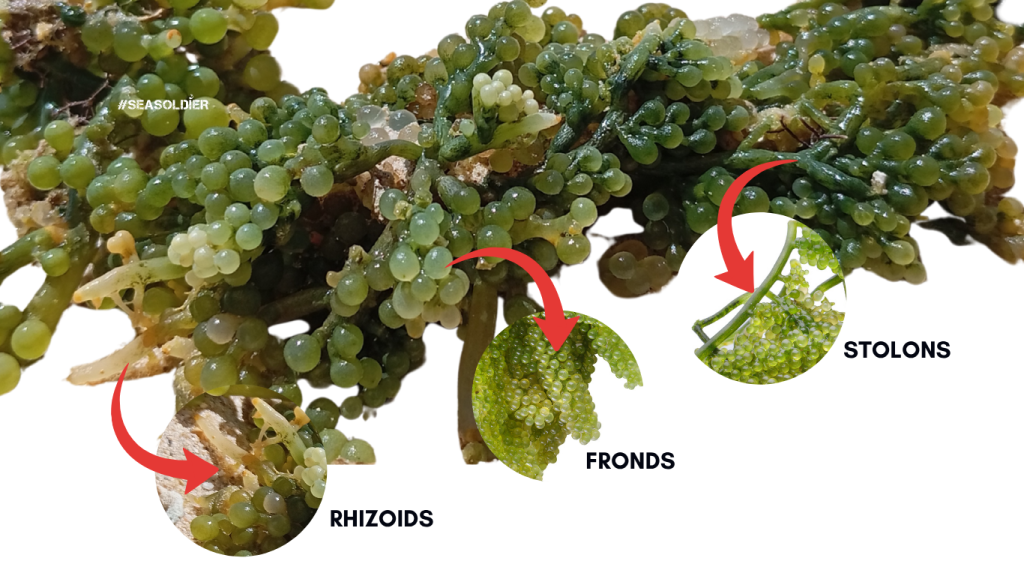
Morphological structure of Caulerpa sp. showing the frond, stolon, and rhizoid that support attachment and growth. Illustration: Seasoldier (2026)
Among the many known species, two of the most widely consumed edible sea grapes are Caulerpa racemosa and Caulerpa lentillifera. Both feature grape-like spherical structures that have earned them the common names “sea grapes” and “green caviar.” Although both species are edible, they differ in appearance, texture, and cultivation practices.
Two Edible Sea Grape Species
Caulerpa Racemosa
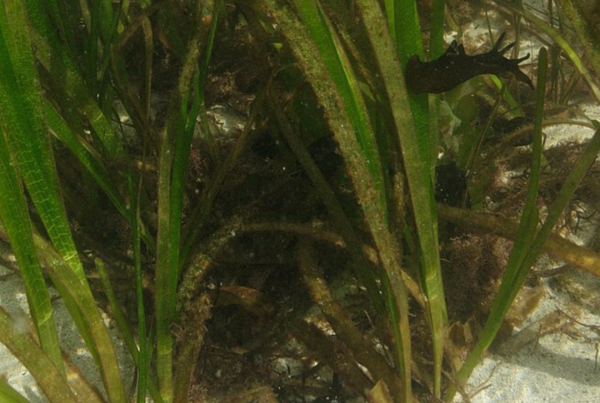
 Photo: Caulerpa racemosa. Source: Wikimedia Commons
Caulerpa racemosa is a sea grape species commonly found growing naturally in shallow tropical waters. It develops through creeping stolons that anchor to sandy substrates using rhizoids. From these stolons arise upright branches bearing rounded to oval structures that resemble clusters of grapes, making it one of the best-known sea grape species.
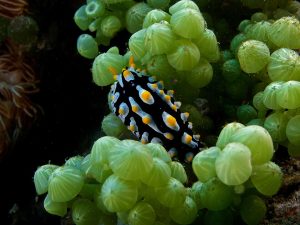
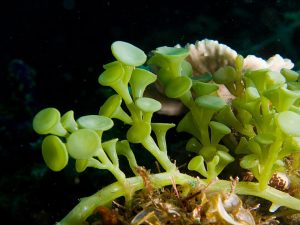 Photo: Caulerpa racemosa. Source: Wikimedia Commons
The grape-like structures of Caulerpa racemosa are generally larger, less uniform, and arranged in a more irregular branching pattern than those of other sea grape species. Its coloration ranges from light green to dark green. Like other members of the order Bryopsidales, Caulerpa racemosa has a siphonous body structure that supports extensive branching and diverse growth forms.
In many coastal communities across Indonesia, Caulerpa racemosa is traditionally consumed as a local food source and is increasingly being recognized as a marine commodity with promising development potential.
Caulerpa Lentillifera
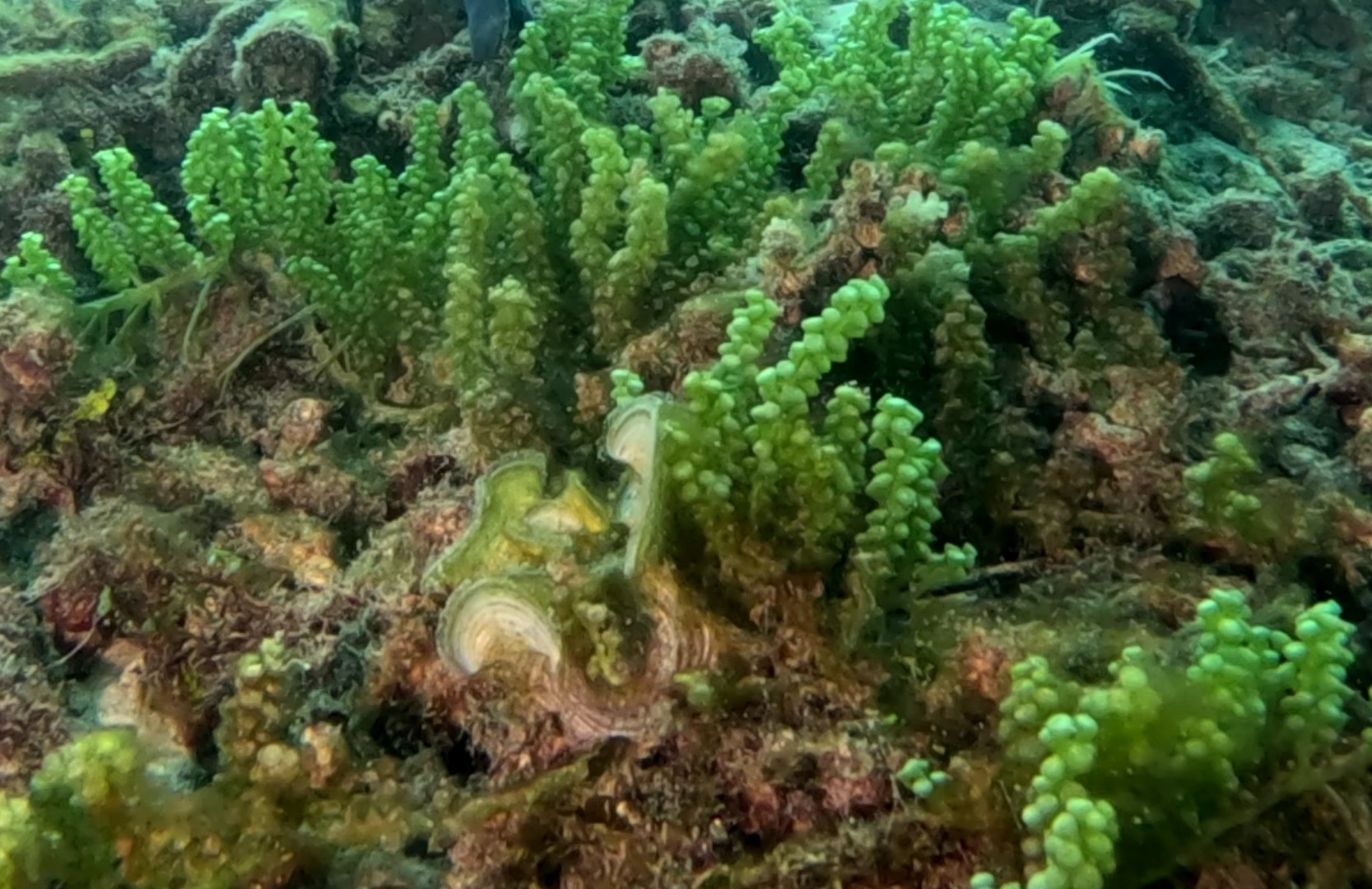
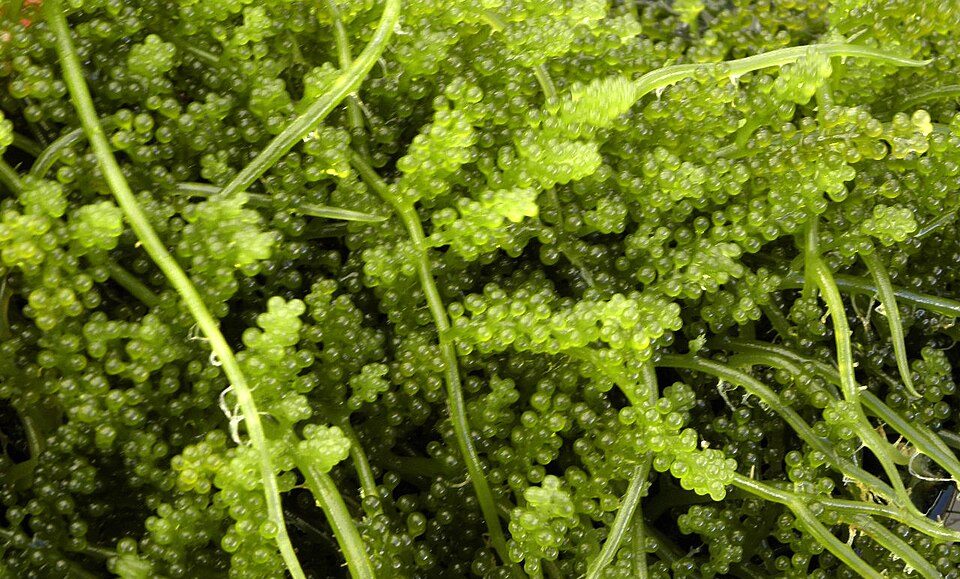 Photo: Caulerpa lentillifera. Source: Wikimedia Commons
Caulerpa lentillifera is the sea grape species most widely known internationally as a green caviar. It is characterized by small, tightly packed spherical structures arranged in neat chains resembling strings of pearls. This species is a siphonous macroalga and can grow up to approximately 30 cm under suitable environmental conditions.
Unlike terrestrial plants, Caulerpa lentillifera does not possess true leaves. Its tiny bead-like structures have a delicate texture and produce a distinctive popping sensation when eaten, accompanied by a natural umami flavor from the sea. These characteristics have made it a popular ingredient in fresh salads, seafood dishes, and sushi.
In addition, Caulerpa lentillifera is more commonly cultivated on a commercial scale, particularly in Japan and the Philippines, where demand for nutritious marine foods continues to grow.
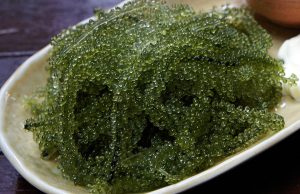
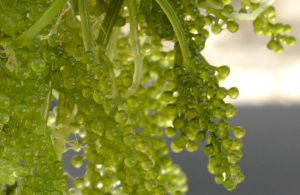 Photo: Caulerpa lentillifera. Source: Wikimedia Commons
Benefits and Potential of Sea Grapes
Beyond their role as a traditional sea vegetable in many Asian countries, sea grapes from the genus Caulerpa have attracted growing scientific interest due to their nutritional composition and bioactive compounds. More than 100 Caulerpa species have been identified worldwide, but Caulerpa racemosa and Caulerpa lentillifera remain among the most widely consumed.
Research on Caulerpa racemosa has shown that it contains carbohydrates, proteins, lipids, and essential minerals such as calcium (Ca), iron (Fe), and manganese (Mn). Further analyses have also identified amino acids, phenolic compounds, and flavonoids, all of which contribute to its nutritional value and biological activity.
Meanwhile, Caulerpa lentillifera contains a variety of nutrients and phytochemicals, including carbohydrates, dietary fiber, minerals, proteins, vitamins, natural pigment, and several bioactive compounds that have made it the subject of numerous studies exploring its potential as a functional food.
In addition to their nutritional value, both sea grape species have demonstrated antioxidant activity. A study comparing Caulerpa racemosa and Caulerpa lentillifera collected from Malaysia found that both species contain phenolic compounds and flavonoids associated with antioxidant properties. However, Caulerpa racemosa exhibited stronger antioxidant activity in the study.
Another area of interest is their antibacterial potential. The same research found that extracts from both species were capable of inhibiting the growth of several bacterial strains, including Methicillin-resistant Staphylococcus aureus (MRSA). The study further reported that the chloroform extract of Caulerpa racemosa showed the most promising antibacterial activity among the extracts tested. These findings highlight the potential of both species as a source of natural bioactive compounds worthy of further scientific investigation.
Beyond their potential health-related applications, sea grapes also offer significant economic opportunities. Through their value as food products, their bioactive potential, and their cultivation prospects, Caulerpa racemosa and Caulerpa lentillifera demonstrate how marine biodiversity can be utilized responsibly and sustainably to support food security, scientific research, and coastal livelihoods.
Author: Novi W Lestari
References:
- Syakilla, N., George, R., Chye, F. Y., Pindi, W., Mantihal, S., Ab Wahab, N., Fadzwi, F. M., Gu, F. H., & Matanjun, P. (2022). Cosmeceutical and biological applications of Caulerpa lentillifera. Foods, 11(18), 2832. https://doi.org/10.3390/foods11182832
- Aroyehun, A. Q. B., Razak, S. A., Palaniveloo, K., Nagappan, T., Rahmah, N. S. N., Jin, G. W., Chellappan, D. K., Chellian, J., & Kunnath, A. P. (2020). Bioprospecting cultivated tropical green algae, Caulerpa racemosa (Forsskal): A perspective on nutritional properties, antioxidative capacity, and anti-diabetic potential. Foods, 9(9), 1313. https://doi.org/10.3390/foods9091313
- Wikimedia Foundation. (n.d.). Caulerpa. In Wikipedia. Retrieved June 2, 2026, from https://en.wikipedia.org/wiki/Caulerpa
- Wikimedia Foundation. (n.d.). Caulerpa lentillifera. In Wikipedia. Retrieved June 2, 2026, from https://en.wikipedia.org/wiki/Caulerpa_lentillifera
- Wikimedia Foundation. (n.d.). Caulerpa racemosa. In Wikipedia. Retrieved June 2, 2026, from https://en.wikipedia.org/wiki/Caulerpa_racemosa
- Yap, W. F., Tay, V., Tan, S. H., Yow, Y. Y., & Chew, J. (2019). Decoding antioxidant and antibacterial potentials of Malaysian green seaweeds: Caulerpa racemosa and Caulerpa lentillifera, 8(3), 152. https://doi.org/10.3390/antibiotics8030152
Photo Source:
- Seasoldier. (2026). Seasoldier documentation archive.
- Seasoldier. (2026). Illustration of Caulerpa morphology.
- Wikimedia Commons contributors. (n.d.). Images of Caulerpa racemosa and Caulerpa lentillifera. Wikimedia Commons. Retrieved June 2, 2026, from https://commons.wikimedia.org/